In the modern world, we often think of globalization as a digital phenomenon—a series of ones and zeroes flying through fiber-optic cables. However, the physical reality of our global economy is far more grounded, salty, and narrow. Approximately 80% to 90% of global trade is carried by sea. This massive flow of energy, food, and consumer goods relies on a handful of narrow maritime passages known as geopolitical choke points.
A choke point is a narrow geographic feature, such as a strait or a canal, where traffic is forced to converge. If these points are blocked or disrupted, the ripple effects are felt instantly in gas prices, supermarket shelves, and national security councils. To understand the world today, one must understand these seven critical “veins” of global commerce.
The Strategic Awakening: How Humanity Learned to Value the Narrows
The realization that controlling a narrow strip of water could grant a nation mastery over an entire region is not a modern discovery. Ancient civilizations were the first to grasp this “choke point” logic. The city-state of Athens rose to power partly by controlling the Hellespont (now the Dardanelles), ensuring its grain supply from the Black Sea.
However, the formalization of this concept came during the Age of Discovery and was later codified by the naval strategist Alfred Thayer Mahan. In his seminal 1890 work, The Influence of Sea Power upon History, Mahan argued that national greatness was inextricably linked to the sea. He posits that a nation with a powerful navy and control over strategic maritime “gates” could project power globally.
As steamships replaced sails and oil replaced coal, the world became more interconnected. The 19th and 20th centuries saw a mad dash by imperial powers—primarily Britain, France, and later the United States—to secure these passages. They realized that you didn’t need to conquer a whole continent; you just needed to hold the keys to its front door.
1. The Strait of Hormuz: The World’s Oil Valve
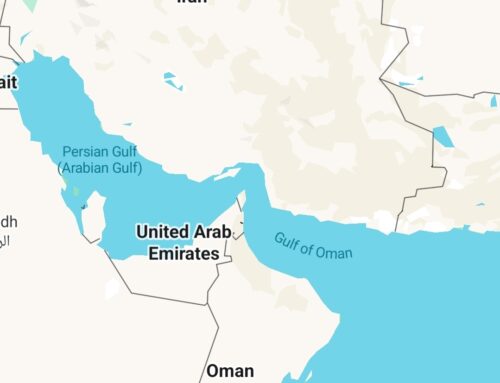
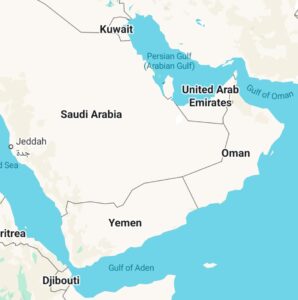
The Strait of Hormuz is arguably the most volatile and economically significant choke point on the planet. Located between Oman and Iran, it connects the Persian Gulf with the Gulf of Oman and the Arabian Sea.
-
Why it matters: It is the world’s most important oil transit passage. At its narrowest, the shipping lanes are only two miles wide in either direction.
-
The Volume: Roughly 21 million barrels of oil per day flow through this strait—about 21% of global petroleum liquids consumption.
-
Geopolitical Tension: Because Iran sits on the northern border of the strait, it has frequently used the threat of closing Hormuz as a diplomatic lever against international sanctions. A total blockage of Hormuz would likely send global oil prices into an unprecedented spiral.
2. The Malacca Strait: The Gateway to Asia
Connecting the Indian Ocean to the South China Sea and the Pacific, the Malacca Strait is the shortest sea route between Middle Eastern energy suppliers and the massive markets of East Asia (China, Japan, and South Korea).
-
Location: Between the Malay Peninsula and the Indonesian island of Sumatra.
-
The “Malacca Dilemma”: This term was coined by former Chinese President Hu Jintao. It refers to China’s fear that in a conflict, an enemy power (like the US Navy) could blockade the strait, effectively strangling the Chinese economy by cutting off its energy and raw material imports.
-
Risks: Beyond war, the Malacca Strait is a historical hotspot for piracy. The narrowness and high volume of slow-moving tankers make it a target-rich environment for maritime crime.
3. The Suez Canal: The Shortcut of Civilizations
The Suez Canal is a man-made marvel in Egypt that connects the Mediterranean Sea to the Red Sea. Before its completion in 1869, ships traveling from Europe to Asia had to circumnavigate the entire continent of Africa—a journey of thousands of extra miles.
-
The “Ever Given” Lesson: In 2021, the world received a stark reminder of the canal’s fragility when the container ship Ever Given ran aground and blocked the passage for six days. The blockage held up an estimated $9.6 billion worth of trade each day.
-
Strategic Value: It is the primary route for manufactured goods from Asia to Europe. Without it, the “just-in-time” supply chains of modern retail would collapse.
4. Bab al-Mandeb: The Gate of Tears
Directly south of the Suez Canal lies the Bab al-Mandeb, a strait located between Yemen on the Arabian Peninsula and Djibouti and Eritrea in the Horn of Africa. Its name translates to “The Gate of Tears,” a nod to the dangers historically associated with its navigation.
-
The Link: It connects the Red Sea to the Gulf of Aden. Most traffic through the Suez Canal must also pass through this strait.
-
Modern Conflict: The ongoing civil war in Yemen and the presence of Houthi rebels have made this a high-risk zone. In recent years, drone and missile attacks on commercial shipping have forced many companies to take the long route around the Cape of Good Hope, significantly increasing shipping costs and carbon emissions.
5. The Panama Canal: Linking Two Oceans
In the Western Hemisphere, the Panama Canal is the indispensable link between the Atlantic and Pacific Oceans. Completed in 1914, it saved ships the treacherous journey around South America’s Cape Horn.
-
The Engineering Challenge: Unlike the Suez, which is a sea-level canal, the Panama Canal uses a complex system of locks to lift ships over the mountainous terrain of the isthmus.
-
Climate Risk: Interestingly, the greatest threat to the Panama Canal today is not war, but climate change. The canal relies on freshwater from Lake Gatun to operate its locks. Severe droughts in recent years have lowered water levels, forcing the canal authority to limit the weight and number of ships passing through.
6. The Turkish Straits: The Black Sea Sentinel
The Turkish Straits consist of the Bosphorus and the Dardanelles. Together, they form the only maritime link between the Black Sea and the Mediterranean.
-
The Bosphorus: This strait splits the city of Istanbul in two. It is incredibly narrow and winding, making it one of the most difficult passages in the world to navigate safely.
-
The Montreux Convention: A 1936 international agreement gives Turkey control over the straits but guarantees the free passage of civilian vessels in peacetime. During the Russia-Ukraine conflict, Turkey used its authority under this convention to limit the passage of warships, illustrating how a choke point can be used as a tool of neutrality and de-escalation.
7. The Strait of Gibraltar: The Pillars of Hercules
Known in antiquity as the Pillars of Hercules, the Strait of Gibraltar is the only natural entrance to the Mediterranean Sea from the Atlantic Ocean.
-
Location: Between Spain and the British Overseas Territory of Gibraltar to the north, and Morocco and the Spanish enclave of Ceuta to the south.
-
The Strategic Hub: Since the Mediterranean is almost entirely landlocked, every ship entering from the Americas or Western Europe must pass through this 8-mile-wide gap. Control over this strait has been contested for centuries by Romans, Moors, Spaniards, and the British, who have held the “Rock of Gibraltar” since 1704.
Beyond the Map: Layers of Information for the Curious Mind
To truly appreciate the importance of these seven points, we must look at the “invisible” data that layers over the geography.
The Economic Ripple Effect
When a choke point closes, the world experiences “demand shock.” It isn’t just that the goods are late; it’s that the insurance premiums for every ship in the region skyrocket. This cost is passed directly to the consumer. For example, if the Strait of Hormuz were closed, it is estimated that oil could reach $200 per barrel within weeks, triggering a global recession.
The Military Dimension
Major naval powers like the United States, China, and Russia utilize a “blue water” strategy, meaning they maintain fleets capable of operating across the open ocean. However, their primary objective is often “Sea Lines of Communication” (SLOC) protection. The US Navy’s presence in the Persian Gulf and the South China Sea is specifically designed to ensure these choke points remain open to “free and open” navigation.
The Environmental Toll
These straits are ecological bottlenecks as well. The high concentration of shipping leads to increased risks of oil spills, noise pollution (which affects whale migration), and the introduction of invasive species through ballast water.
The Emergence of the “Eighth” Choke Point?
As the polar ice caps melt, a new route is opening: The Northern Sea Route across the top of Russia. While not yet a year-round “choke point,” it could eventually challenge the Suez Canal’s dominance by offering a faster route from East Asia to Europe.
Conclusion: The Fragile Geometry of Peace
The history of the 21st century will likely be written in these narrow waters. Our global civilization, for all its technological advancement, remains a prisoner of geography. We have built a world that requires the constant, frictionless movement of goods through gaps only a few miles wide.
Understanding the seven choke points is more than a lesson in geography; it is a lesson in the fragility of our daily lives. Whether it is a geopolitical conflict in the Middle East, a drought in Central America, or a stray container ship in Egypt, the narrows remind us that we are all connected by the same thin blue lines.
As we look toward the future, the challenge for global leaders will be to manage these passages not as tools of nationalistic leverage, but as common heritage sites of global stability. After all, when a choke point is squeezed, the whole world gasps for air.
Key Data Summary Table
| Choke Point | Connects | Primary Commodity | Major Risk |
| Hormuz | Persian Gulf & Arabian Sea | Crude Oil / LNG | Geopolitical Conflict |
| Malacca | Indian Ocean & Pacific Ocean | Electronics / Oil | Piracy / Blockade |
| Suez Canal | Med. Sea & Red Sea | Consumer Goods | Groundings / Logistics |
| Bab al-Mandeb | Red Sea & Gulf of Aden | Oil / Cargo | Insurgency / Piracy |
| Panama Canal | Atlantic & Pacific | Grains / Coal / Containers | Climate / Water Levels |
| Turkish Straits | Black Sea & Med. Sea | Russian Oil / Grain | Regional War |
| Gibraltar | Atlantic & Med. Sea | Diversified Trade | Territorial Disputes |