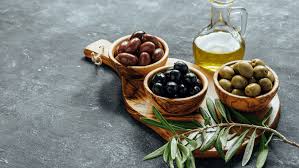
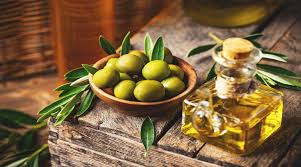
Olive oil is perhaps the only substance on earth that is simultaneously a sacred religious relic, a high-stakes financial commodity, a skincare miracle, and the undisputed king of the kitchen. Homer called it “liquid gold,” and for three thousand years, empires have risen and fallen based on their ability to control the groves of the Mediterranean.
Today, olive oil is more than just a salad dressing; it is a $15 billion global industry currently grappling with the most significant challenges in its history—from shifting climate zones to complex geopolitical trade wars. This guide dives deep into every facet of the olive, from the ancient amphorae of Rome to the modern futures contracts on European exchanges.
1. The Deep Roots: A History of the Holy Fruit
The story of olive oil is the story of Western civilization itself. While the exact origin is debated, archaeological evidence suggests that Olea europaea was first domesticated in the Eastern Mediterranean (modern-day Syria, Lebanon, and Israel) roughly 6,000 to 8,000 years ago.
Ancient Empires and the Spread of the Tree
-
The Minoans (Crete): Around 2500 BCE, the Minoans of Crete turned olive oil into a commercial powerhouse. They were the first to export it in large quantities, using it to build a maritime empire.
-
The Greeks: For the Greeks, the olive was divine. Athena, the goddess of wisdom, supposedly won the patronage of Athens by gifting the city an olive tree. It was used to anoint athletes, light lamps, and as a primary medicine.
-
The Roman Empire: The Romans took olive oil to an industrial scale. They developed the Scorpio press and massive “tanker” ships to transport oil across the empire. At its peak, Rome imported millions of liters of oil from Spain (Baetica) and North Africa. In fact, Monte Testaccio in Rome is an artificial hill made entirely of discarded Spanish olive oil amphorae—testament to the scale of ancient trade.
The Middle Ages to the Renaissance
During the Middle Ages, production shifted into the hands of monasteries, which kept the traditions alive for liturgical use and medicine. It wasn’t until the Renaissance that olive oil reclaimed its status as a gourmet culinary staple, particularly in Italy and Spain, as European royalty began to favor it over animal fats.
2. Growing Conditions and the Harvest
Olive trees are survivors. They thrive in environments where other crops wither, but they are incredibly specific about their “comfort zone.”
The Ideal Atmosphere
The olive tree requires a Mediterranean climate:
-
Chilling Requirement: A period of “vernalization” (cold but not freezing temperatures) in winter is necessary for the tree to set buds.
-
The Heat of Summer: It needs long, hot, dry summers to ripen the fruit.
-
Soil: It prefers well-drained, lime-rich, or rocky soils. It is famously drought-tolerant but extremely sensitive to “wet feet” (poor drainage).
The Harvest Ritual
Harvesting usually occurs between October and January, and the timing defines the oil’s character:
-
Early Harvest (Verde): Picked when green. This produces less oil, but the quality is incredibly high, with a peppery, “grassy” flavor and maximum antioxidants.
-
Late Harvest: Picked when purple or black. The yield is higher, and the flavor is buttery and mild, but the shelf life is shorter.
Methods of Harvesting:
-
Hand-Picking: Common in Greece and for high-end Italian oils. It prevents bruising of the fruit.
-
Beating (Vareo): A traditional Spanish method where long poles are used to knock olives onto nets.
-
Mechanical Shakers: Large machines grip the trunk and vibrate the tree.
-
Over-the-Row Harvesters: Used in “super-intensive” groves where trees are planted like hedges and harvested by giant machines—the most efficient but least “romantic” method.
3. The Science of Health: Why Olive Oil Wins
Not all fats are created equal. Olive oil is primarily composed of monounsaturated fatty acids (MUFAs), specifically oleic acid, which makes up about 73% of its content.
Comparative Analysis with Other Oils
| Oil Type | Primary Fat | Notable Benefit | Smoke Point |
| Extra Virgin Olive Oil | MUFA | Extremely high Polyphenols (Oleocanthal) | ~190°C–210°C |
| Coconut Oil | Saturated | MCTs (Fast energy) | 177°C |
| Canola Oil | MUFA/PUFA | Neutral flavor, Omega-3s | 204°C |
| Avocado Oil | MUFA | Very high smoke point | 271°C |
| Sunflower Oil | PUFA | High Vitamin E | 227°C |
Why it is “Liquid Gold” for the Body
-
Oleocanthal: This specific polyphenol acts like a natural ibuprofen, reducing inflammation. It’s what causes that “scratchy” feeling in the back of your throat when you taste high-quality oil.
-
Heart Health: Olive oil is the cornerstone of the Mediterranean Diet. It helps lower LDL (bad) cholesterol while maintaining HDL (good) cholesterol.
-
Brain Health: Recent studies suggest it may help clear the plaques in the brain associated with Alzheimer’s.
4. Global Production: Who Rules the Groves?
Production is heavily concentrated in the Mediterranean basin, though new players are emerging.
The Top Producers (Approx. 2024-2026 data)
-
Spain: The undisputed titan. Producing nearly 45-50% of the world’s supply, primarily in the Andalusia region.
-
Italy: Focuses on variety and branding. While they produce less than Spain, they are the masters of the “premium” market.
-
Greece: Leads the world in the percentage of oil that qualifies as Extra Virgin (70-80%).
-
Tunisia: An emerging giant, often exporting in bulk to Italy and Spain.
-
Turkey & Morocco: Significant regional players with growing export ambitions.
Importers and Exporters
-
Top Exporters: Spain, Italy, Tunisia, Greece, and Portugal.
-
Top Importers: The USA is the world’s largest consumer outside the EU, followed by Brazil and China. Interestingly, Italy is a top importer too—they buy bulk oil from North Africa to blend, bottle, and re-export under Italian labels.
5. Industrial Use: More than Just Food
Olive oil is a versatile raw material used in several multi-billion dollar industries:
-
Cosmetics & Skincare: Used as a moisturizer and a source of Squalene, an organic compound that mimics skin’s natural oils.
-
Pharmaceuticals: Used as a carrier oil for fat-soluble vitamins and in ointments for wound healing.
-
Soaps: “Castile soap” is traditionally made with 100% olive oil.
-
Lubricants: Used in high-end machinery where food-safe lubricants are required.
6. Trading and Finance: The Ticker and the Tussle
Olive oil is a commodity, and like wheat or oil, it is traded on exchanges. However, it is more fragmented than other commodities.
Where it Trades
-
MFA (Mercado de Futuros del Aceite de Oliva): Located in Jaén, Spain. This is the primary exchange for olive oil futures.
-
Bolsa de Comercio de Buenos Aires: Significant for the Southern Hemisphere market.
-
Global Indices: Investors track the IMF Global Price of Olive Oil, often found under the ticker POLVOILUSDM (on platforms like FRED or TradingView).
Geopolitics and Subsidies
The olive oil trade is deeply political. The EU Common Agricultural Policy (CAP) provides billions in subsidies to Spanish, Italian, and Greek farmers. This creates a friction point with non-EU producers like Tunisia and the US (California), who argue the subsidies keep prices artificially low for European exporters.
Trade Wars: In 2019-2021, the US-EU trade dispute (over Airbus/Boeing) led to a 25% tariff on Spanish olive oil, which fundamentally shifted market shares toward Italy and Greece for several years.
7. The Climate Crisis: A Threatened Harvest
The most significant threat to olive oil today is Climate Change.
-
Drought in Andalusia: Spain has faced record-breaking droughts and heatwaves in recent years. This caused a global price spike in 2024, with “liquid gold” prices nearly doubling.
-
Xylella Fastidiosa: A “tree-killing” bacteria, exacerbated by warmer winters, has decimated millions of trees in Puglia, Italy.
-
Shifting Zones: We are seeing the “Northward Shift.” Olive groves are now being planted in Southern England and Northern France, areas previously too cold for the tree to survive.
8. Consumer Trends: What’s Next?
The modern consumer is smarter and more demanding:
-
Traceability: Buyers now want to know the specific farm and even the specific variety (e.g., Arbequina vs. Coratina). QR codes on bottles are becoming standard.
-
Health-Focus: High-polyphenol “Medicinal Grade” oils are a burgeoning luxury segment.
-
Sustainability: “Regenerative” farming and organic certifications are no longer niche; they are requirements for the premium market.
How Extraction Methods Influence Quality
-
Traditional Pressing: Beautiful but prone to oxidation as the oil is exposed to air.
-
Centrifugation: The modern standard. It uses high speed to separate oil from water and solids in a closed, oxygen-free environment. This preserves the most nutrients.
-
Cold-Pressed vs. Cold-Extracted: “Cold” technically means below 27°C (80°F). Any higher and you lose the delicate volatile aromas.
Conclusion
Olive oil is a bridge between the ancient world and the modern laboratory. It is a testament to human resilience—a tree that can live for 2,000 years, producing a fruit that guards our hearts and delights our palates. Whether you are an investor watching the POLVOILUSDM ticker or a home cook drizzling EVOO over a Caprese salad, you are participating in a tradition that is as old as civilization itself.