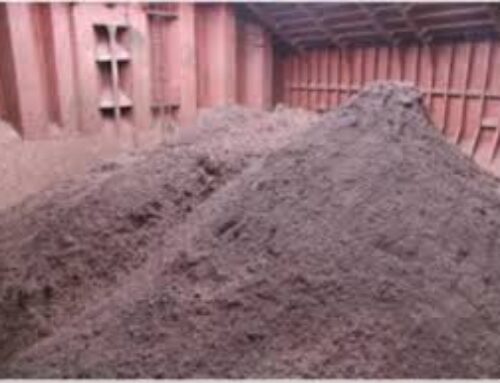
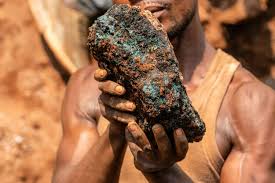
In the high-stakes world of global commodities, few elements command as much attention, controversy, and strategic manoeuvring as cobalt. Often referred to as “Blue Gold,” this silvery-blue metal has transitioned from an ancient pigment used by Egyptian pharaohs to a critical linchpin of the 21st-century green energy revolution. As the world pushes toward a carbon-neutral future, cobalt stands at the centre of a geopolitical and technological storm.
1. Introduction to the Metal: What is Cobalt?
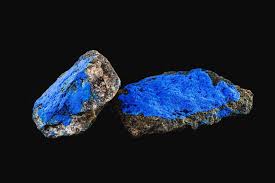
Cobalt ($Co$) is a transition metal located in the d-block of the periodic table, nestled between iron and nickel. While it is rarely found as a free element in nature, it is typically extracted as a byproduct of copper and nickel mining. Historically, cobalt was prized for its intense blue pigment, which has colored ceramics, glass, and jewellery for millennia.
What Makes It Special?
Cobalt possesses a unique combination of physical and chemical properties that make it irreplaceable in modern high-tech applications:
-
Thermal Stability: It has an exceptionally high melting point of 1495°C, allowing it to maintain its strength and structural integrity at extreme temperatures.
-
Ferromagnetism: Like iron and nickel, cobalt is one of the few elements that are naturally magnetic. It retains its magnetism at high temperatures, which is vital for high-performance magnets.
-
Energy Density: In the context of electrochemistry, cobalt is a powerhouse. It allows for high energy density and structural stability in lithium-ion battery cathodes, ensuring that batteries don’t just hold more energy, but also last longer and remain safe during rapid charge-discharge cycles.
2. Trading the “Blue Gold”: Exchanges and Tickers
As a globally traded commodity, cobalt’s price is a barometer for the health of the tech and automotive sectors. It is primarily traded on two major international exchanges:
| Exchange | Ticker Symbol | Description |
| London Metal Exchange (LME) | CO | The primary global benchmark for physical delivery and hedging. |
| CME Group (COMEX) | CJ | A cash-settled contract that allows investors to gain exposure to cobalt price movements without physical handling. |
As of early 2026, cobalt metal prices have stabilised near $56,000 per metric ton, rebounding from the volatility seen during the Democratic Republic of Congo’s (DRC) export restrictions in 2025. Investors track these tickers closely, as supply disruptions in Central Africa can cause overnight double-digit percentage swings in price.
3. The Global Mining Landscape: Who and Where?
Cobalt is geographically concentrated to an extent that makes other critical minerals look abundant. Its production is a tale of two nations: the DRC and Indonesia.
The Biggest Miners
While dozens of companies operate in the space, a few giants control the lion’s share of production:
-
CMOC Group (China Molybdenum): As of 2025-2026, CMOC has emerged as the world’s largest producer, largely due to its massive Tenke Fungurume and Kisanfu mines in the DRC.
-
Glencore: The Swiss-based multinational was long the king of cobalt. It remains a dominant force with its Mutanda and KCC operations in the DRC.
-
Eurasian Resources Group (ERG): A major player focusing on the “Metalkol” project, which reprocesses historic tailings to extract cobalt and copper.
-
Norilsk Nickel (Nornickel): The Russian giant remains a key producer of high-grade cobalt as a byproduct of its Arctic nickel operations.
Geography of Production
The “Copperbelt” of Central Africa is the heart of the cobalt world.
| Nation | Global Share (Approx.) | Primary Extraction Method |
| DRC | 70-73% | Byproduct of Copper mining |
| Indonesia | 12-14% | Byproduct of Nickel (HPAL process) |
| Russia | 3-4% | Byproduct of Nickel/Palladium |
| Australia | 2% | Nickel-Cobalt laterite deposits |
| Canada | 1-2% | Magmatic Nickel-Copper sulfides |
4. The Trade Flow: Importers and Exporters
The global flow of cobalt is a study in vertical integration. While the DRC is the undisputed king of exports, China is the undisputed king of refining.
-
Biggest Exporters: The DRC accounts for nearly three-quarters of the world’s raw cobalt exports, typically in the form of cobalt hydroxide. Indonesia has rapidly climbed the ranks to become the second-largest exporter, driven by Chinese-backed HPAL (High-Pressure Acid Leaching) plants.
-
Biggest Importers: China imports over 80% of the world’s raw cobalt. It hosts the majority of the world’s refining capacity, turning raw material into battery-grade cobalt sulfate or high-purity metal. Other significant importers include Japan, South Korea, and the United States, though these nations primarily import refined products for their battery and aerospace industries.
5. The Heart of the Green Revolution: Cobalt’s Role in Renewable Energy
If lithium is the “petrol” of the future, cobalt is the “engine block.” In renewable energy systems, cobalt’s role is primarily centred on energy storage.
Electric Vehicle (EV) Batteries
The most common high-performance battery chemistry is NMC (Nickel Manganese Cobalt). The chemical formula for these cathodes, such as $LiNi_{0.8}Mn_{0.1}Co_{0.1}O_{2}$ (NMC 811), highlights cobalt’s presence.
-
Stability: Cobalt prevents the cathode from overheating and maintains its structural integrity over thousands of cycles.
-
Energy Density: It allows EVs to travel further on a single charge.
Grid Energy Storage
As we shift to intermittent energy sources like solar and wind, massive battery arrays are needed to stabilise the grid. High-density cobalt-based batteries are often used in residential and commercial storage systems where space is at a premium and high performance is required.
6. Price Volatility and Industrial Demand
Cobalt is notoriously volatile. Because it is a byproduct of other metals, its supply cannot easily respond to price signals. If cobalt prices double but copper prices crash, miners might still cut production, tightening the cobalt market even further.
How Fluctuating Prices Impact Demand
When cobalt prices spike—as they did in 2022 and again in 2025—industries react with “thrifting” or “substitution”:
-
Battery Sector: High prices have accelerated the shift toward LFP (Lithium Iron Phosphate) batteries, which contain zero cobalt. While LFP batteries have lower energy density, they are significantly cheaper.
-
Aerospace: Unlike the battery sector, the aerospace industry has a rigid demand. There are currently no viable substitutes for cobalt in superalloys used for jet engines; therefore, this sector simply absorbs the higher costs, making it a “price-insensitive” consumer.
7. Beyond Batteries: Diverse Industrial Uses
While batteries consume roughly 70% of global cobalt, the remaining 30% is vital for high-performance engineering:
-
Superalloys: Used in turbine blades for jet engines and power plants. These alloys must withstand extreme heat and pressure without deforming (a phenomenon known as “creep”).
-
Hard Metals: Cobalt is used as a binder in tungsten carbide tools for cutting, drilling, and mining.
-
Medical Implants: Due to their biocompatibility and wear resistance, cobalt-chrome alloys are standard for hip and knee replacements.
-
Magnets: Alnico (Aluminum-Nickel-Cobalt) magnets are essential for sensors, guitar pickups, and high-end audio equipment.
8. Comparing the Costs: Cobalt vs. Other Critical Minerals
In the hierarchy of battery minerals, cobalt is the “expensive” one.
| Mineral | 2026 Price (Approx.) | Volatility Level |
| Cobalt | $56,000/mt | High (Geopolitically driven) |
| Lithium (Carbonate) | $15,000 – $20,000/mt | Very High (Supply chain ramp-up) |
| Nickel | $17,000 – $18,000/mt | Moderate (Industrial base) |
| Copper | $9,000 – $10,000/mt | Low/Moderate (Economic bellwether) |
Cobalt’s high price point is the primary reason why Tesla and other automakers are aggressively pursuing “cobalt-free” or “cobalt-light” battery chemistries.
9. The Geopolitical Chessboard
The supply of cobalt is a focal point of the “New Cold War.”
-
China’s Dominance: China controls roughly 80% of the world’s cobalt refining and owns many of the largest mines in the DRC. This has created a “chokepoint” that worries Western governments.
-
The Lobito Corridor: In 2025-2026, the U.S. and EU have heavily invested in the Lobito Corridor—a rail project connecting the DRC’s mineral-rich interior to the Atlantic coast of Angola. This initiative is designed to bypass China-controlled infrastructure and secure a “Western-friendly” supply chain.
-
Resource Nationalism: The DRC’s 2025 decision to implement export quotas and a 10% royalty fee on exports is a clear sign of nations asserting more control over their sovereign wealth.
10. Technological Innovations and the Future
As the saying goes, “the best cure for high prices is high prices.” The cost and ethical concerns surrounding cobalt are driving a wave of innovation.
Cobalt Alternatives
-
LFP (Lithium Iron Phosphate): Already dominant in mid-range EVs and grid storage.
-
Sodium-ion Batteries: These use abundant salt instead of lithium and cobalt, though they are still in the early stages of commercialisation.
-
Solid-State Batteries: Promising to use different chemical architectures that could drastically reduce or eliminate the need for cobalt while doubling energy density.
The Recycling Revolution (Urban Mining)
Recycling is no longer just an environmental goal; it is a strategic necessity. Innovations are enhancing efficiency:
-
Hydrometallurgy: A chemical process that uses aqueous solutions to recover up to 99% of cobalt from “black mass” (crushed old batteries).
-
Direct Recycling: A cutting-edge process that recovers the cathode material without breaking it down into its elemental parts, saving energy and cost.
-
AI-Driven Sorting: In 2026, automated facilities use AI and X-ray sensors to sort different battery chemistries at lightning speed, ensuring that cobalt-rich batteries are processed separately for maximum recovery.
11. Conclusion: The Blue Horizon
Cobalt remains a metal of contradictions. It is essential for the transition to clean energy, yet its extraction is often linked to complex ethical and environmental challenges. Its price reflects both the brilliance of modern engineering and the volatility of global politics.
As we move toward 2030, the role of cobalt will likely shift. While it may lose its “mass-market” status to LFP and sodium-ion batteries in the EV sector, its importance in high-performance aerospace, medical, and defence applications will only grow. For investors, policymakers, and consumers, understanding the “Blue Gold” is no longer optional—it is a requirement for navigating the future of energy.