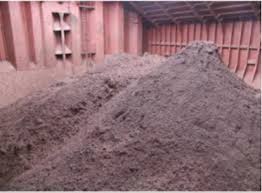
In the high-stakes world of industrial commodities, iron ore is often pictured as massive, jagged rocks—the “Lump” that feeds the fires of civilization. But there is a silent, powdery sibling to those rocks that actually dominates the global market. Iron Ore Fines represent the vast majority of seaborne trade, yet for the uninitiated, they are often misunderstood as mere “waste” or “dust.”
To understand the global economy, one must understand the distinction between regular (lump) iron ore and iron ore fines. They are born of the same earth, but they inhabit entirely different worlds of engineering, trading, and environmental impact.
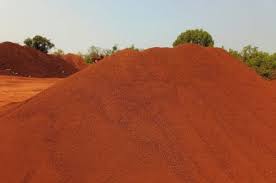
1. The Birth of a Commodity: How Fines are “Born”
Iron ore isn’t mined as a uniform product. It exists in the earth as heterogeneous formations—bands of hematite, magnetite, or goethite mixed with silica and alumina. The “birth” of fines happens in two distinct stages: geological and mechanical.
The Geological Origin
Some iron ore deposits are naturally “friable.” This means the rock is inherently crumbly. In regions like India’s Barabil-Koira valley or parts of Brazil’s Iron Quadrangle, the ore has been weathered over millions of years, leaving it predisposed to break into small particles the moment it is touched by a shovel.
The Mechanical Separation
Even for harder ores, the mining process creates fines. When a massive blast occurs in an open-pit mine, the resulting boulders are too large for a furnace. They must be sent through primary, secondary, and sometimes tertiary crushers.
-
The Sizing Rule: As the ore is crushed, it is passed over vibrating screens.
-
The Split: Anything that stays above roughly $6.3mm$ (often generalized as $6mm$) is classified as Lump Ore.
-
The Fines: Anything that falls through the screen—the “dust” and small grains—is Iron Ore Fines.
Statistically, for every ton of ore mined, the ratio of lump to fines can vary wildly. In some Australian mines, you might get a $30/70$ split (Lump/Fines), while in other friable deposits, fines can make up $90\%$ of the total output.
2. The Great Difference: Why Size is a Billion-Dollar Question
If they have the same chemical DNA—say, $62\% Fe$ (iron content)—why are they traded as different commodities? The answer lies in physics, not chemistry.
The Permeability Problem
A Blast Furnace (BF) is essentially a giant chimney. To turn ore into liquid iron, you need to blow incredibly hot air (the “blast”) upward through a stack of raw materials.
-
Lump Ore acts like a pile of large stones. There is plenty of “void space” between the stones for the hot air to roar through.
-
Fines act like wet sand. If you fill a pipe with sand and try to blow air through it, the air gets blocked. The furnace “chokes.”
This physical limitation is why fines are not a “plug-and-play” commodity. You cannot simply throw a mountain of fines into a traditional blast furnace without specialized preparation.
3. The Sintering and Pelletizing Revolution: Making “Dust” Useful
Is it “right” to add them to a blast furnace? The answer is no, not in their raw state. But it is essential to use them, or the world would run out of steel in a decade. To solve the “choking” problem, the industry uses two primary “agglomeration” processes to turn fines back into lumps.
The Sintering Process
Most integrated steel mills have a Sinter Plant. Here, iron ore fines are mixed with “coke breeze” (fine coal dust) and fluxes (like limestone). This mixture is spread on a moving grate and ignited. The heat partially melts the surfaces of the fines, fusing them into a porous, clinker-like mass called Sinter. This sinter is then broken into chunks and fed into the furnace.
Pelletization
For very fine ores (concentrates), sintering doesn’t work well. Instead, the ore is ground even finer, mixed with a binder (like bentonite clay), and rolled in giant drums to form small, uniform spheres called Pellets. These are then baked in a kiln to harden.
4. Is the Mining Process Different?
Technically, the extraction (the digging) is identical. However, the beneficiation (processing) is where the paths diverge.
-
Lump Ore Mining: Focuses on “Direct Shipping Ore” (DSO). The goal is to crush it just enough to meet the size specs ($6.3mm$ to $31.5mm$) and ship it. It requires minimal water and minimal processing energy.
-
Fines/Concentrate Mining: Often involves much more intensive processing. If the ore is low-grade (e.g., $30\% Fe$), it must be ground into a powder to “release” the iron from the waste rock (gangue). Magnetic separators or flotation tanks are then used to pull the iron out, resulting in a high-purity fine powder known as Concentrate.
5. Trading the “Dust”: Tickers, Swaps, and Market Dynamics
In the financial world, “Iron Ore” almost always refers to Fines. When you see a price headline like “Iron Ore hits $\$110$,” they are talking about the 62% Fe Fines CFR China benchmark.
Where and How They Trade
Fines are the most liquid commodity in the ferrous complex. Because they require processing (sintering), they trade at a discount to Lump Ore. This difference is known as the Lump Premium.
Key Tickers and Exchanges
If you want to trade or track iron ore fines, you look at these specific venues:
-
SGX (Singapore Exchange): The global “home” of iron ore derivatives.
-
Ticker: FEF (Iron Ore 62% Fines Futures).
-
Ticker: FE (Iron Ore 62% Fines Swaps).
-
Ticker: M65F (65% Fe Fines – High Grade).
-
-
DCE (Dalian Commodity Exchange): The powerhouse of Chinese domestic trading.
-
Ticker: I (e.g., I2409 for September 2024 expiry). Note: This is priced in CNY and is often the “tail that wags the dog” for global prices.
-
-
CME (Chicago Mercantile Exchange):
-
Ticker: TIO (Iron Ore 62% Fe, CFR China TSI).
-
Ticker: PIO (Iron Ore 62% Fe, CFR China Platts).
-
Ticker: TIC (Iron Ore 58% Fe, Low Alumina).
-
Swaps vs. Futures
-
Futures (FEF): These are exchange-traded and used by everyone from hedge funds to miners to lock in a price for physical delivery or financial settlement.
-
Swaps (FE): These are often over-the-counter (OTC) agreements used by steel mills to hedge the average price of a month, rather than a specific date.
6. Market Dynamics: The Spread Game
Trading iron ore is a game of “spreads.” Market participants don’t just watch the flat price; they watch the relationship between different types of fines:
-
The 65/62 Spread: This is the difference between high-grade Brazilian fines (Carajás) and standard Australian fines (Pilbara Blend). When steel mill margins are high, they buy the 65% ore because it’s more efficient.
-
The Lump Premium (LPF): This is the extra amount a mill is willing to pay to avoid the Sinter Plant. If the cost of coal/energy goes up, the Lump Premium usually skyrockets because sintering becomes too expensive.
7. The Environmental Impact: The Hidden Cost of Fines
This is the “dark side” of iron ore fines. While they are a cheaper raw material, their use in a blast furnace via the sintering route is one of the most polluting industrial processes on Earth.
The Sinter Plant Footprint
Sintering requires burning coal (coke breeze) in an open-air environment. This results in:
-
Particulate Matter (Dust): Massive amounts of fine dust that can plague local communities.
-
Gaseous Emissions: High levels of $SO_x$ (Sulfur Oxides), $NO_x$ (Nitrogen Oxides), and Dioxins.
-
Carbon Intensity: Because you have to “heat the ore twice” (once to sinter it and once to melt it in the BF), the carbon footprint of using fines is significantly higher than using “Direct Charge” Lump Ore.
This is why, as the world moves toward Green Steel, the market is shifting. Direct Reduced Iron (DRI) plants, which use natural gas or hydrogen instead of coal, cannot use standard fines—they require high-grade Pellets.
Summary: A Tale of Two Ores
Iron ore fines are not just “small rocks.” They are a distinct chemical and physical category of commodity that requires its own infrastructure, its own pricing indices, and its own metallurgical strategy.
| Feature | Iron Ore Fines | Regular (Lump) Ore |
| Size | $< 6.3mm$ | $6.3mm$ to $31.5mm$ |
| BF Use | Must be Sintered/Pelletized | Direct Charge |
| Price | Benchmark / Base Price | Benchmark + Premium |
| Environment | High impact (Sintering) | Low impact (Direct) |
| Trading Vol. | Extremely High | Moderate |
Understanding the “Fines” market is the key to understanding the pulse of the global steel industry. They are the dust that builds the world, but they are also the challenge that the green revolution must solve.