
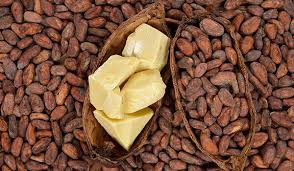
When most people think of cocoa, they envision a steaming mug of hot chocolate or a decadent bar of dark chocolate. However, in the world of global trade, cocoa is far more than a treat—it is a sophisticated commodity with a complex supply chain. At the heart of this industry lies cocoa butter, the pale-yellow, edible vegetable fat extracted from the cocoa bean.
Often referred to as “The Golden Fat,” cocoa butter is the backbone of the multibillion-dollar chocolate and cosmetic industries. To understand its value, we must first look at its source: the humble cocoa bean.
Understanding Cocoa as a Commodity
In simple terms, a commodity is a basic good used in commerce that is interchangeable with other goods of the same type. Just as gold, crude oil, or wheat are traded based on standardized quality rather than brand name, cocoa beans are traded as a global commodity.
Cocoa beans are the seeds of the Theobroma cacao tree. Farmers harvest the pods, ferment the seeds, and dry them before they enter the global market. While the beans themselves are the primary commodity, they are eventually processed into two distinct products: cocoa powder and cocoa butter.
The Atmospheric and Soil Needs for Cocoa Growth
The Theobroma cacao tree is notoriously finicky. It does not grow just anywhere; it requires a very specific environment often referred to as the “Cocoa Belt”—the region extending roughly 20 degrees north and south of the Equator.
1. Atmospheric Requirements
-
Temperature: Cocoa trees thrive in a constant temperature between 21°C and 32°C. They cannot tolerate temperatures below 15°C.
-
Rainfall: High humidity and consistent rainfall are essential. Ideally, a cocoa plantation needs 1,500mm to 2,000mm of rain annually, distributed evenly throughout the year.
-
Shade and Wind Protection: Young cocoa trees are sensitive to direct sunlight and strong winds. They are often grown under the canopy of taller “mother trees,” such as banana, palm, or rubber trees, which provide shade and break the wind.
2. Soil Requirements
Cocoa requires soil that is rich, deep, and well-drained.
-
Nutrients: The soil must be high in nitrogen, potassium, and phosphorus.
-
Structure: It needs to be permeable enough to allow roots to penetrate deep (up to 1.5 meters) but retentive enough to hold moisture during short dry spells.
-
pH Levels: A slightly acidic to neutral pH (between 5.0 and 7.5) is ideal for nutrient absorption.
What Exactly is Cocoa Butter?
Cocoa butter is the natural fat found in cocoa beans. A single bean is approximately 50% to 55% fat. When beans are roasted and ground into a paste (known as cocoa liquor), this paste can be pressed to separate the solids (powder) from the fats (butter).
Why is it different from the “Commodity”?
While “Cocoa” (the beans) is the primary commodity traded on futures markets, cocoa butter is a value-added derivative.
-
Standardization: Cocoa beans are graded by origin and quality. Cocoa butter is graded by its melting point, FFA (Free Fatty Acid) content, and scent.
-
Price Disparity: The price of cocoa butter is often significantly higher than the price of raw beans because it requires intensive industrial processing and is in higher demand for premium products.
-
Physical Properties: Unlike other vegetable fats, cocoa butter is solid at room temperature but melts at approximately 34°C to 38°C—just below human body temperature. This unique property is what gives chocolate its “melt-in-the-mouth” sensation.
Trading Cocoa Butter: Exchanges and Market Dynamics
Cocoa is one of the “soft” commodities. It is traded primarily on two major global exchanges:
-
Intercontinental Exchange (ICE) in New York: Focuses largely on beans from the Americas and Southeast Asia.
-
London International Financial Futures and Options Exchange (LIFFE/ICE Futures Europe): Primarily handles African cocoa, which accounts for over 70% of global production.
Factors Affecting the Price of Cocoa Butter
The price of cocoa butter is rarely stable. It is influenced by a “combined ratio” (the price of butter and powder relative to the bean price). Key drivers include:
-
Weather Patterns: Since production is concentrated in West Africa (Ivory Coast and Ghana), a drought or excessive rain in this specific region can send global prices skyrocketing.
-
Pests and Disease: Outbreaks of “Black Pod” disease or “Swollen Shoot” virus can decimate yields.
-
Geopolitical Stability: Political unrest in major producing nations often leads to supply chain disruptions.
-
Demand for Luxury Goods: Because cocoa butter is a key ingredient in high-end chocolate and skincare, its price is sensitive to global economic health. When consumer spending drops, the demand for “premium” fats often follows.
Industries Fueled by Cocoa Butter
Cocoa butter is a versatile raw material used across several massive industries:
Nutritional Benefits: More Than Just Fat
While it is high in calories, cocoa butter contains several beneficial components that make it a “healthy” fat when consumed in moderation.
-
Healthy Fatty Acids: It is composed primarily of stearic acid, oleic acid, and palmitic acid. Interestingly, stearic acid (a saturated fat) has a neutral effect on cholesterol levels.
-
Polyphenols: Cocoa butter contains antioxidants that can help reduce inflammation and improve skin elasticity.
-
Vitamin E: It is a natural source of tocopherols, which support eye health and brain function.
Note: Most of the “heart-healthy” reputation of chocolate comes from the cocoa solids (powder), but the butter provides the essential carrier for these nutrients and helps with the absorption of fat-soluble vitamins.
Processing and Refining: From Bean to Butter
The journey from a tropical tree to a stable fat involves several sophisticated steps.
1. Fermentation and Drying
After harvest, beans are fermented for 5–7 days to develop flavor precursors and then dried to reduce moisture content to about 7%.
2. Roasting and Winnowing
Beans are roasted to develop the chocolate aroma. The “winnowing” process removes the outer husks, leaving behind the cocoa nibs.
3. Grinding and Pressing
Nibs are ground into cocoa liquor. This liquid is then placed into a hydraulic press.
-
The Press: Under immense pressure, the fat is squeezed out as a golden liquid (cocoa butter), leaving behind a solid “cake” that is ground into cocoa powder.
4. Refining and Deodorizing
For the cosmetic industry, the butter is often deodorized. This involves steam distillation to remove the strong chocolate scent, resulting in a neutral fat that won’t interfere with perfume fragrances.
Small-Scale vs. Large-Scale Processing
The methods used to extract cocoa butter vary significantly based on the scale of the operation.
Small-Scale / Artisanal Producers
Small-scale farmers or craft chocolate makers often use the Broma Process. This involves hanging bags of cocoa mass in a warm room and letting the butter drip out slowly by gravity.
-
Benefit: Preserves complex flavors and nutrients.
-
Drawback: Low efficiency and high labor costs.
Large-Scale Manufacturers
Industrial giants use massive multistage hydraulic presses and chemical solvent extraction (in some cases) to maximize yield.
-
Benefit: High consistency, enormous volume, and lower price per unit.
-
Drawback: The high heat used in industrial pressing can sometimes degrade the more delicate antioxidants.
Environmental Impacts and Sustainability
The global appetite for cocoa has come at a high environmental cost. As a commodity, cocoa is a major driver of change in tropical landscapes.
The Challenges
-
Deforestation: In West Africa, significant portions of protected rainforests have been cleared to make room for cocoa plantations.
-
Soil Degradation: Monoculture farming (growing only cocoa) strips the soil of nutrients, eventually leading to lower yields and the need for more chemical fertilizers.
-
Carbon Footprint: The processing and global shipping of cocoa products contribute significantly to greenhouse gas emissions.
Sustainable Practices and Solutions
To combat these issues, the industry is shifting toward more ethical frameworks:
-
Agroforestry: Integrating cocoa trees with other fruit and timber trees. This restores biodiversity, protects the soil, and provides farmers with alternative income streams.
-
Certification Programs: Organizations like Rainforest Alliance and Fairtrade ensure that cocoa is grown without illegal deforestation and that farmers receive a living wage.
-
Regenerative Agriculture: Focusing on “soil health” by using organic mulches and composting rather than synthetic chemicals.
-
Traceability Technology: Using blockchain and GPS mapping to ensure that the cocoa butter in your chocolate bar can be traced back to a specific, non-deforested farm.
Conclusion
Cocoa butter is a fascinating commodity that sits at the intersection of agriculture, high finance, and daily indulgence. Its unique physical properties make it irreplaceable in both our kitchens and our medicine cabinets. However, as the world moves toward a more conscious form of capitalism, the future of cocoa butter depends on our ability to balance our demand with the health of the tropical ecosystems that produce it.
The next time you enjoy the smooth texture of a chocolate bar or the soothing feel of a lotion, remember the “Golden Fat”—a product of specific climates, complex chemistry, and a global market that never sleeps.