
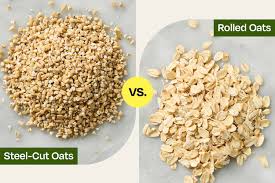
For centuries, oats were often dismissed as “the grain of the North”—a hardy, humble crop primarily reserved for livestock or those living in climates too damp and cold for wheat to thrive. Samuel Johnson’s 1755 dictionary famously defined oats as “a grain, which in England is generally given to horses, but in Scotland supports the people.” To which a Scotsman reportedly replied, “And where will you find such horses and such men?”
Today, that “humble” grain has undergone a massive global rebranding. From the frothy oat milk in your morning latte to the high-tech colloidal suspensions in luxury skincare, oats are a multi-billion dollar commodity. In this deep dive, we’ll explore everything from the biology of the plant to the high-stakes world of commodity trading.
1. The Botany of Oats: Debunking the “Oat Tree” Myth
Before we get into the dirt and the dollars, let’s clear up a common misconception: There is no such thing as an “Oat Tree.”
If you were picturing an orchard of towering trees dripping with oat clusters, you’re not alone—but you might be thinking of something else. Oats (Avena sativa) are actually a species of cereal grass.
Anatomy of the Oat Plant
The oat plant grows from a single seed into a tall, hollow stalk known as a culm, typically reaching heights of 2 to 5 feet (0.6 to 1.5 meters). Unlike wheat or barley, which grow their seeds in tight, symmetrical spikes, oats grow in a loose, branching structure called a panicle.
-
The Panicle: This is the “head” of the oat plant. It consists of many small branches, each ending in a spikelet that contains two or three kernels.
-
The Hull: Each kernel is encased in a tough, fibrous outer shell called a hull. Unlike “naked oats,” most commercial varieties require mechanical milling to remove this hull before they can be eaten by humans.
-
The Root System: Oats have a fibrous root system that is exceptionally good at scavenging nutrients from the soil, which is why they can grow in “poor” land where other grains struggle.
2. Global Geography: Where the World’s Oats Grow
Oats are the ultimate “cool kids” of the agricultural world. They despise high heat and humidity, preferring the temperate, moist climates of the Northern Hemisphere.
Top Producing Regions
-
Russia: Historically the world’s largest producer, utilizing the vast, cool plains of Siberia and the Ural regions.
-
Canada: The “Oat Powerhouse” of the West. The Canadian prairies (Saskatchewan, Manitoba, and Alberta) produce some of the highest-quality oats globally, much of which is exported to the United States.
-
The European Union: Countries like Poland, Finland, and Sweden are major players. Scandinavian oats are particularly prized for their high oil content and bright color due to the long summer daylight hours.
-
Australia: A major producer in the Southern Hemisphere, specializing in “hay oats” for animal fodder and high-quality milling oats for the Asian market.
-
United States: While production has dipped in favor of corn and soy, states like South Dakota, North Dakota, and Minnesota remain significant producers.
3. The Farming Process: From Seed to Silo
Farming oats is a delicate dance with the weather. Because they require moisture but can’t stand “wet feet” (waterlogged soil), timing is everything.
Planting and Soil Preparation
Oats are usually the first crop in the ground in the spring. In some regions, they are planted as “winter oats” in late autumn to be harvested in early summer.
-
Seeding Depth: Farmers typically plant seeds about 1 to 2 inches (2.5 to 5 cm) deep.
-
Crop Rotation: Oats are often used in a rotation following a nitrogen-fixing crop like clover or alfalfa. They act as a “break crop,” helping to reduce soil-borne diseases that affect wheat or barley.
Specific Regional Practices
-
The Canadian Prairies: Here, “no-till” farming is common to preserve soil moisture. Massive air seeders plant thousands of acres in a matter of days.
-
Northern Europe: Due to higher rainfall, European farmers often use more intensive fungicide programs to prevent “Crown Rust,” a common oat fungal disease.
-
Organic Farming: Oats are a favorite among organic farmers because the plant’s rapid early growth creates a thick canopy that naturally shades out weeds, reducing the need for herbicides.
4. The Economics of Oats: Importers, Exporters, and Tickers
Oats aren’t just food; they are a global currency.
The Big Players in Trade
-
The King of Exports: Canada dominates the export market, accounting for nearly 70% of global oat exports in some years. Most of this flows south to the U.S. food industry.
-
The Big Importers: The United States is the world’s largest importer of oats, driven by the massive demand for breakfast cereals and the booming oat milk industry. China has also become a significant importer as its dairy-alternative and animal-feed sectors expand.
Trading on the Exchange
If you want to bet on the price of oatmeal, you head to the Chicago Board of Trade (CBOT), which is part of the CME Group.
-
Exchange: CBOT (Chicago Board of Trade)
-
Ticker Symbol: ZO
-
Contract Size: 5,000 bushels
The price of oats is highly volatile. Because it is a “minor” grain compared to corn or wheat, a small disruption in the Canadian harvest can send the ZO ticker into a frenzy.
5. Industrial Applications: More Than Just Breakfast
While we mostly see oats in a bowl, they are a versatile raw material across several industries.
| Industry | Usage of Oats |
| Food & Beverage | Flour, rolled oats, steel-cut oats, and the massive oat milk sector. |
| Livestock | High-quality feed for horses (it provides “cool” energy) and young calves. |
| Cosmetics | “Colloidal oatmeal” is a regulated skin protectant used in lotions for eczema and dry skin. |
| Chemicals | Oat hulls are used to produce furfural, a solvent used in refining lubricating oils and as a chemical intermediate. |
| Brewing | Craft brewers use oats to add a creamy mouthfeel and “haze” to New England IPAs and Stouts. |
6. Nutritional Comparison: Oats vs. The Field
Why choose oats over wheat or rice? It comes down to a specific type of soluble fiber called Beta-glucan.
Oats vs. Other Grains
-
Protein: Oats generally have higher protein content (about 11–15%) than rice or corn.
-
Fiber: Unlike wheat, where the fiber is mostly in the outer bran, the fiber in oats is distributed throughout the entire grain.
-
Fat: Oats have a higher healthy fat content than most other grains, which contributes to their satiating “hearty” feel.
-
Gluten-Free Status: Pure oats are naturally gluten-free, though they are often processed in facilities that handle wheat, leading to cross-contamination.
7. Innovation: The Future of Oats
We are currently in the “Oat Renaissance.” Innovation is moving beyond the grocery aisle.
-
Oat Milk 2.0: Companies are now using enzymes to create oat milks that behave exactly like cow’s milk for professional baristas—foaming and stretching without separating.
-
Biodegradable Packaging: Research is underway to use oat hulls (the waste product of milling) to create biodegradable plastics and insulation.
-
Plant-Based Meat: Oats are being used as a binder in “bleeding” plant-based burgers because they provide a better texture than soy or pea protein alone.
8. Challenges and Environmental Impact
No crop is perfect. Farmers face significant hurdles, but oats have a surprisingly green resume.
Farmer Challenges
-
Lodging: Oats have a relatively weak stem. If a heavy storm hits right before harvest, the plants can fall over (lodge), making it nearly impossible for a combine harvester to pick them up.
-
The “Niche” Problem: Because there is less money in oats than corn, there is less research into high-yield, disease-resistant seeds.
-
Climate Change: As the “cool” zones of the world warm up, traditional oat-growing regions are becoming less hospitable, forcing farmers to move further north.
Environmental Impact
Oats are actually one of the more environmentally friendly grains:
-
Low Pesticide Use: Because they grow so fast, they often don’t need as much herbicide as wheat.
-
Water Efficiency: They require significantly less water than almonds (a major competitor in the “milk” space).
-
Soil Health: Their deep, fibrous roots help prevent soil erosion and improve soil structure for the next crop in the rotation.
9. Market Demand: The Seasonal Swing
The demand for oats used to be purely seasonal—spiking in winter when people wanted hot porridge. However, the Oat Milk Boom has flattened this curve. Demand is now high year-round.
-
Supply Peaks: Prices usually dip in August/September during the Northern Hemisphere harvest.
-
Demand Volatility: If the Canadian crop is “weather-stressed,” prices can skyrocket, as the food industry has very few other places to turn for high-quality milling oats.
Conclusion: The Resilient Kernel
Oats have traveled a long road from being a weed in wheat fields to a staple of the modern, health-conscious pantry. They are environmentally robust, nutritionally superior, and economically vital to the northern reaches of our planet. Whether you are a trader watching the ZO ticker or someone just trying to lower their cholesterol, the humble oat is a powerhouse that deserves its place in the spotlight.