When most people think of “palm oil,” they picture the vast plantations of Southeast Asia or the controversial ingredient in their peanut butter. However, the oil palm tree (Elaeis guineensis) is a biological overachiever that actually produces two distinct types of oil. While Crude Palm Oil (CPO) gets most of the headlines, its sibling—Palm Kernel Oil (PKO)—is a powerhouse in the world of oleochemicals, cosmetics, and confectionery.
This blog post dives deep into the intricate world of Palm Kernel Oil, from the tropical soil where it begins to the high-stakes commodity exchanges where its price is dictated.
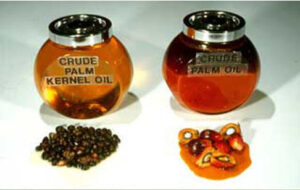
What is Palm Kernel Oil?
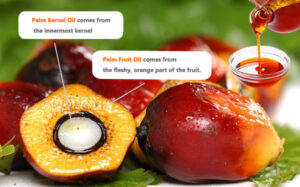
Palm Kernel Oil is a plant-based oil derived from the inner seed (the kernel) of the oil palm fruit. While the outer fleshy part of the fruit yields the orange-red palm oil we use for frying, the kernel inside the hard shell yields a light-colored, highly saturated oil that is remarkably different in its chemical makeup.
Historically, PKO has been a staple in West African diets for centuries, but its industrialization in the 20th century transformed it into a global commodity. Today, it is prized for its high Lauric acid content, a trait it shares almost exclusively with coconut oil.
The Tale of Two Oils: PKO vs. Regular Palm Oil
It is a common misconception that palm oil and palm kernel oil are the same. In reality, they are about as different as butter and lard in terms of application and chemistry.
| Feature | Regular Palm Oil (CPO) | Palm Kernel Oil (PKO) |
| Source | Fleshy mesocarp (outer fruit) | Inner kernel (seed) |
| Color | Deep orange/red (crude) | Light yellow to clear |
| Saturated Fat | ~50% | ~80% – 85% |
| Main Fatty Acid | Palmitic Acid | Lauric Acid |
| Primary Use | Cooking oil, Margarine | Soaps, Detergents, Confectionery |
| Market Rival | Soybean oil, Sunflower oil | Coconut oil |
Because PKO is high in Lauric acid ($C_{12}H_{24}O_2$), it remains solid at room temperature and has a sharp melting point—making it perfect for chocolate coatings that melt in your mouth but stay solid on the shelf.
The Growing Process: From Seedling to Harvest
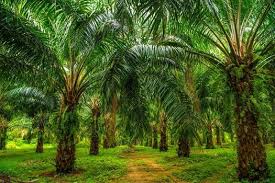
The journey of PKO begins with the Elaeis guineensis tree. This tropical giant is one of the most efficient oil-producing crops on the planet, yielding significantly more oil per hectare than soy or rapeseed.
-
Nursery Phase: Seeds are germinated in controlled environments for nearly a year until they are hardy enough for the field.
-
Field Planting: Young palms are moved to plantations, usually spaced in a triangular pattern to maximize sunlight.
-
The Wait: A palm tree requires about 3 to 4 years of growth before it produces its first “Fresh Fruit Bunches” (FFB).
-
Peak Production: The tree reaches its peak productivity between years 8 and 15, though it can continue producing for 25 to 30 years before it becomes too tall for efficient harvesting.
-
Climate Needs: The oil palm is a “diva” of the tropics. It requires consistent temperatures between 24°C and 32°C, high humidity, and at least 2,000mm of annual rainfall distributed evenly throughout the year.
Extraction: How PKO is Made
The process of getting the oil out of the kernel is a multi-step mechanical and chemical journey.
-
Sterilization and Threshing: The fruit bunches are steamed to stop enzymatic activity and then shaken to separate the individual fruits from the bunch.
-
The First Press: The fleshy outer part of the fruit is pressed to extract Crude Palm Oil. This leaves behind the “press cake”—a mixture of fiber and the hard-shelled nuts.
-
Nut Separation: Using a process of winnowing or hydrocyclones, the nuts are separated from the fiber.
-
Cracking and Shelling: The hard nuts are cracked (often in a centrifugal cracker) to release the kernel. The shells are often recycled as fuel for the mill’s boilers.
-
Crushing the Kernel: The kernels are dried and then sent to a kernel crushing plant (KCP). Here, they are either mechanically pressed (expeller pressing) or treated with a solvent (usually hexane) to extract the oil.
-
Refining: The resulting “Crude Palm Kernel Oil” (CPKO) is then refined, bleached, and deodorized (RBD) for use in food or industry.
Global Trade: Exchanges and Pricing
Palm Kernel Oil isn’t just a commodity; it’s a financial instrument. It is traded globally, and its price is a major indicator for the “Laurics” market.
-
Bursa Malaysia Derivatives (BMD): This is the world’s most influential exchange for palm products. The Crude Palm Kernel Oil Futures (FPKO) contract is the global benchmark.
-
Multi Commodity Exchange (MCX): In India, one of the largest consumers, palm products are traded extensively.
-
Dalian Commodity Exchange (DCE): China’s primary hub for vegetable oil trading.
Prices are quoted in US Dollars or Malaysian Ringgit per metric ton. Traders watch the “spread” between PKO and Coconut oil closely; because they are chemically similar, if Coconut oil prices spike, PKO demand (and price) usually follows.
The Geopolitics of Palm Kernel Oil
The geography of PKO production creates a unique geopolitical landscape. Indonesia and Malaysia together produce roughly 85% of the world’s supply. This concentration gives these two nations immense power over global supply chains.
-
Export Levies and Taxes: Indonesia frequently adjusts its export taxes to prioritize domestic supply (DMO – Domestic Market Obligation). A sudden ban on exports, as seen in 2022, can send global soap and snack prices skyrocketing overnight.
-
Sustainability and the EU: The European Union’s Deforestation Regulation (EUDR) has created significant tension. European buyers demand “RSPO” (Roundtable on Sustainable Palm Oil) certification to ensure no primary forests were cleared. Producing nations often view these regulations as “green protectionism” or a neo-colonial trade barrier.
-
Labor Geopolitics: The industry relies heavily on migrant labor (often from Indonesia, Bangladesh, and Nepal to Malaysia). Changes in immigration policy or labor rights scandals can halt production and impact global prices.
Atmospheric Factors: The Power of El Niño
Since palm trees are stationary and long-lived, they are at the mercy of the weather. Unlike soy, where a bad season can be “replanted” next year, a bad weather event for palm can affect yields for 24 months.
-
El Niño: This is the industry’s greatest fear. El Niño brings severe drought to Southeast Asia. Lack of water causes “floral abortion” (the tree stops producing fruit bunches to save its own life). The impact of a drought today is usually seen in PKO production 12 to 18 months later.
-
La Niña: While rain is good, too much of it (La Niña) causes flooding. This doesn’t hurt the trees, but it makes it impossible for workers to harvest and transport the heavy fruit bunches, leading to “logistical bottlenecks” and temporary price spikes.
-
Haze: Forest fires (often from land clearing) create a thick haze that reduces sunlight. Less sunlight means less photosynthesis, which directly correlates to lower oil content in the kernels.
Industries: Where Does Your PKO Go?
If you looked at the ingredient label of everything in your house, you’d likely find PKO in 50% of the items—often hidden under different names.
-
Personal Care (The Surfactant King): This is the biggest use. PKO is the raw material for Sodium Lauryl Sulfate (SLS). If your shampoo lathers, your toothpaste foams, or your laundry detergent cuts through grease, thank Palm Kernel Oil.
-
Confectionery: PKO is used to make Cocoa Butter Substitutes (CBS). It gives chocolate coatings that “snap” and prevents them from melting at room temperature.
-
Food Processing: It is used in non-dairy creamers, whipped toppings, and shortenings because of its stability and long shelf life.
-
Pharmaceuticals: It acts as an excipient (a carrier) for various medications and ointments.
The Big Players: Importers and Exporters
The global flow of PKO moves from the tropical equator to the industrial north and the populous East.
-
Top Exporters:
-
Indonesia: The undisputed king.
-
Malaysia: The secondary powerhouse with highly sophisticated refining capabilities.
-
Nigeria & Thailand: Growing producers, though much of their production is consumed domestically.
-
-
Top Importers:
-
China: Used for its massive food processing and chemical manufacturing sectors.
-
India: Primarily for the personal care and soap industries.
-
The European Union: Highly focused on PKO for “Green” oleochemicals and detergents.
-
The United States: A major buyer for the cosmetics and snack food industries.
-
The Future of PKO
As we look toward the 2030s, the Palm Kernel Oil industry faces a crossroads. The demand for “natural” surfactants (moving away from petroleum-based chemicals) is driving PKO demand higher. However, the pressure for “Deforestation-Free” supply chains is forcing the industry to produce more oil from less land through better genetics rather than expansion.
Palm Kernel Oil is a testament to the complexity of the modern world. It is a product of tropical biology, extracted through heavy industrial engineering, traded on digital global exchanges, and subject to the whims of the Pacific Ocean’s currents. Whether you are washing your hair or eating a chocolate bar, you are a participant in the vast, complex, and essential global PKO economy.