In our daily lives, we are surrounded by products born from wood pulp, often without a second thought. From the pages of the newspaper you read with your morning tea (or coffee, if you’re in a more Western hemisphere) to the cardboard box that delivered your latest online purchase, and even the softness of the tissue paper you use, wood pulp is the silent workhorse of countless industries. It is a commodity of immense global significance, underpinning an economy valued in the hundreds of billions of dollars. More than just a raw material, wood pulp is a sophisticated product with diverse characteristics, produced through intricate processes, and traded on a global scale.
This blog post dives deep into the fascinating world of wood pulp, exploring its market size, the types of wood it originates from, its complex manufacturing processes, its vast customer base, and the critical factors that influence its global price.
A Commodity of Scale: The Size and Scope of the Wood Pulp Market
Wood pulp is far from a niche product. It forms the fundamental building block for paper and paperboard, and its reach is continuously expanding into new, innovative applications.
Market Valuation and Growth: The global wood pulp market is a formidable economic force. In 2024, its estimated market size was around USD 177.98 billion. Looking ahead, the trajectory is one of consistent growth. Projections indicate that the market is expected to reach approximately USD 226.16 billion by 2032, demonstrating a Compound Annual Growth Rate (CAGR) of about 3.04% from 2025 to 2032. Other sources suggest a market size of USD 196.51 billion in 2025, reaching USD 235.77 billion by 2030, with a CAGR of 3.71%. This robust growth is a clear indicator of the commodity’s enduring relevance and expanding applications.
This growth is fueled by several significant trends:
- Soaring Demand for Packaging: The meteoric rise of e-commerce has led to an exponential increase in the demand for corrugated boxes and other paper-based packaging materials. Consumers and companies alike are also increasingly prioritizing sustainable and recyclable packaging alternatives over plastics, further boosting wood pulp’s role.
- Hygiene and Tissue Products: Growing global awareness of sanitation and health, coupled with rising disposable incomes in developing economies, continues to drive demand for tissue paper, toilet paper, paper towels, and other hygiene products, all heavily reliant on wood pulp, particularly fluff pulp.
- Sustainable Alternatives: Beyond traditional paper, wood pulp is gaining traction as a sustainable raw material for bio-based products, including textiles (e.g., lyocell, modal), cellulose nanofibrils (CNF) for advanced materials, and even certain biodegradable plastics. This diversification enhances its market resilience.
From Forest to Fiber: The Types of Wood Used
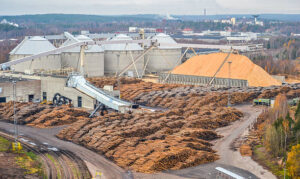
Pulp mill in Finland
The characteristics of wood pulp are fundamentally determined by the type of wood it’s made from. Broadly, wood is classified into two categories for pulping: softwood and hardwood.
1. Softwoods (Coniferous Trees): These come from coniferous trees, which are typically evergreen and have needles or scales.
- Examples: Pine, Spruce, Fir, Larch, Hemlock.
- Fiber Characteristics: Softwood fibers are generally longer and stronger (often 2-4 mm in length). They have thicker cell walls.
- Properties Imparted to Pulp/Paper: Pulp made from softwoods provides excellent tear strength, burst strength, and folding endurance.
- Typical Uses: Ideal for products requiring high strength and durability, such as:
- Packaging materials: Corrugated board (linerboard and fluting), sack kraft paper (for cement bags, sugar bags), and milk cartons.
- Newsprint: Often a blend, but softwood contributes strength.
- Tissue products: Often blended with hardwood for strength.
- Specialty papers: Where high tear resistance is crucial.
2. Hardwoods (Deciduous Trees): These come from deciduous trees, which typically lose their leaves seasonally.
- Examples: Eucalyptus, Birch, Aspen, Oak, Maple, Acacia.
- Fiber Characteristics: Hardwood fibers are significantly shorter and thinner (often 0.5-1.5 mm in length).
- Properties Imparted to Pulp/Paper: Hardwood pulp contributes to smoothness, opacity, bulk, and good formation (evenness). They are also generally easier to bleach to high brightness due to lower lignin content.
- Typical Uses: Excellent for products where smoothness and printability are paramount, such as:
- Printing and writing papers: For books, magazines, office paper, and coated papers.
- Tissue and hygiene products: Provide softness and absorbency.
- Fine papers and specialty papers: Where a smooth surface and good aesthetics are desired.
Geographical Variations: The choice of wood often depends on regional availability and growth rates. For example, eucalyptus, a fast-growing hardwood, is extensively cultivated in plantations in Brazil and other parts of South America for pulp production. Pine and spruce are dominant in the boreal forests of North America and Northern Europe. In some regions, fast-growing trees specifically cultivated for pulp production, known as “pulpwood plantations,” are increasingly common.
The Alchemy of Fiber: The Wood Pulp Manufacturing Process
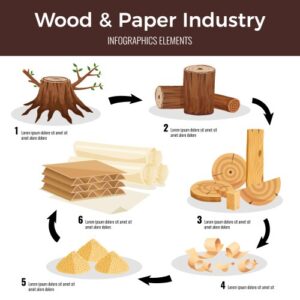
Transforming logs into fine wood pulp is a sophisticated industrial process involving several key stages. The primary goal is to separate the cellulose fibers from lignin, the natural glue that binds them together in wood, and other undesirable components.
There are two main categories of pulping processes: Mechanical Pulping and Chemical Pulping.
I. Mechanical Pulping: This method primarily uses mechanical force to separate fibers. It is characterized by high yield (retains most of the wood’s mass) but results in shorter, weaker fibers and paper that yellows over time due to lignin retention.
- Wood Preparation:
- Debarking: Logs arrive at the mill and are debarked to remove the outer layer, which contains impurities.
- Chipping: Debarked logs are then fed into chippers, which reduce them into small, uniform wood chips (typically 15-30 mm in size).
- Pulping Process:
- Groundwood Pulp (GW): Logs or chips are pressed against large, rotating abrasive stones, mechanically grinding the wood into fibers. Water is added to create a slurry.
- Refiner Mechanical Pulp (RMP): Wood chips are fed into disk refiners, where they are crushed and ground between rotating steel disks.
- Thermomechanical Pulp (TMP): Chips are preheated with steam before entering the refiner. The heat softens the lignin, allowing for better fiber separation with less damage, resulting in stronger pulp than RMP.
- Chemi-Thermomechanical Pulp (CTMP): Chips are pretreated with chemicals (like sodium sulfite) before the thermomechanical refining process. This chemical pretreatment further softens the lignin, leading to even better fiber separation, improved strength, and lower energy consumption compared to TMP. It often has properties intermediate between mechanical and chemical pulps.
- Screening and Cleaning: The pulp slurry is passed through screens to remove shives (fiber bundles that were not properly separated) and other oversized particles. Centrifugal cleaners remove heavier impurities.
- Bleaching (Optional): If a brighter pulp is required (e.g., for newsprint or tissue), mechanical pulps can be bleached using oxidative agents like hydrogen peroxide or sodium hydrosulfite, which brighten the lignin without removing it.
II. Chemical Pulping: This method uses chemical solutions to dissolve lignin, leaving behind mostly pure cellulose fibers. It results in lower yield but produces stronger, cleaner, and more durable fibers.
- Wood Preparation (Same as Mechanical):
- Debarking and Chipping: Logs are debarked and chipped into uniform sizes.
- Pulping Process:
- Kraft Process (Sulfate Process) – The Dominant Method:
- Digestion: Wood chips are cooked in a pressure vessel called a digester, using a solution of sodium hydroxide (NaOH) and sodium sulfide (Na2S), known as “white liquor,” at high temperatures ( – ) and pressure. This process selectively dissolves the lignin and hemicelluloses, leaving cellulose fibers relatively intact.
- Brownstock Washing: The resulting pulp (called “brownstock”) is washed to remove the spent cooking liquor, now called “black liquor,” which contains dissolved lignin and chemicals.
- Black Liquor Recovery: The black liquor is a valuable byproduct. It is concentrated and burned in a recovery boiler to generate energy (steam and electricity) for the mill, and to recover the inorganic pulping chemicals (sodium hydroxide and sodium sulfide) for reuse. This makes the Kraft process highly energy-efficient and relatively sustainable.
- Sulfite Process (Less Common Today):
- Digestion: Wood chips are cooked with a solution of sulfur dioxide (SO2) and a base (such as calcium, magnesium, sodium, or ammonium bisulfite). This process also dissolves lignin but works differently, often resulting in slightly lower strength but easier bleaching. It is less common now due to environmental concerns (sulfur emissions) and lower strength compared to Kraft.
- Kraft Process (Sulfate Process) – The Dominant Method:
- Screening and Cleaning: Similar to mechanical pulps, the chemical pulp undergoes screening and cleaning to remove impurities.
- Bleaching (Often Essential): Chemical pulps are typically bleached to achieve high brightness for most paper products. This involves multiple stages using various chemicals:
- Chlorine-based (historical): Chlorine gas (Cl2) and chlorine dioxide (ClO2) were historically used but are being phased out due to environmental concerns (formation of organochlorine compounds like dioxins).
- Elemental Chlorine-Free (ECF): Uses chlorine dioxide (ClO2) instead of elemental chlorine. This is widely adopted.
- Totally Chlorine-Free (TCF): Uses oxygen, ozone, and hydrogen peroxide for bleaching, completely avoiding chlorine and its compounds. This is the most environmentally friendly method.
- Drying and Baling: The bleached pulp slurry is dewatered and dried into large sheets or rolls, which are then cut into bales for shipping to paper mills or other end-users that do not have integrated pulping facilities. This is known as “market pulp.”
The Customer Spectrum: Industries Reliant on Wood Pulp
The versatility of wood pulp makes it a crucial raw material for a wide array of industries, extending far beyond the traditional paper mill.
- Paper and Paperboard Industry (Primary Customer):
- Printing & Writing Paper: For books, magazines, newspapers (newsprint), office copy paper, brochures, and coated papers used in high-quality printing.
- Packaging Materials: Corrugated cardboard for shipping boxes, folding cartons for consumer goods, liquid packaging board for milk and juice, food service disposables (cups, plates), and specialty packaging. This is the fastest-growing segment.
- Tissue and Hygiene Products: Toilet paper, facial tissues, paper towels, napkins, baby diapers (fluff pulp), feminine hygiene products, and adult incontinence products.
- Specialty Papers: Filter papers (coffee filters, industrial filters), security papers (banknotes), release liners, medical papers, and abrasive backings.
- Textile Industry:
- Dissolving Pulp: A highly purified form of wood pulp (often chemical pulp from hardwoods like eucalyptus or beech) is processed into regenerated cellulose fibers.
- Viscose Rayon: A versatile fiber used in clothing, linings, and home furnishings, known for its softness and drape.
- Lyocell (e.g., Tencel™): A more environmentally friendly regenerated cellulose fiber known for its strength, softness, and breathability, used in fashion and activewear.
- Modal: Another type of rayon known for its softness and resistance to shrinkage.
- Chemical and Bio-Product Industries:
- Cellulose Derivatives: Wood pulp is a source for producing cellulose ethers (e.g., carboxymethyl cellulose – CMC, hydroxyethyl cellulose – HEC) used as thickeners, binders, and stabilizers in food, pharmaceuticals, construction, and paints.
- Nanocellulose (CNF/MFC): Microfibrillated cellulose and nanofibrillated cellulose are advanced materials with high strength-to-weight ratio, high surface area, and unique rheological properties, finding applications in composites, filters, barriers, and biomedical fields.
- Bio-fuels and Bio-chemicals: Research and development are ongoing to convert lignin and cellulose into bio-fuels (e.g., ethanol) and various bio-chemicals, moving towards a forest-based bio-economy.
- Fluff Pulp: Used extensively in absorbent core of hygiene products like diapers and sanitary napkins.
- Construction and Building Materials:
- Insulation: Cellulose insulation made from recycled paper, but virgin pulp can also contribute.
- Fiberboard: MDF (Medium-Density Fiberboard) and HDF (High-Density Fiberboard) use wood fibers (often mechanically refined wood pulp) bonded with resin.
Tailored Fibers: Paper Types and Their Pulp Requirements
The specific properties of the final paper product dictate the type and blend of wood pulp used.
- Newsprint: Primarily uses mechanical pulp (TMP or CTMP) due to its high yield and lower cost, contributing to opacity. Often blended with a small percentage of softwood chemical pulp (like BSKP – Bleached Softwood Kraft Pulp) for added strength to run on high-speed printing presses. Mechanical pulp’s lignin content causes newsprint to yellow over time.
- Printing and Writing Papers (e.g., copy paper, uncoated freesheet): Require a smooth surface, good printability, and brightness. Predominantly use chemical pulps, often a blend of bleached hardwood kraft pulp (BHKP) for smoothness, opacity, and formation, and bleached softwood kraft pulp (BSKP) for strength and runnability. The proportion of hardwood is often higher for smoother, bulkier papers.
- Coated Papers (for magazines, brochures): Similar to printing and writing papers but designed for superior print quality with a coating layer. They rely heavily on BHKP for its excellent surface properties and formation, providing a smooth base for coating. BSKP is added for strength.
- Tissue and Hygiene Products (e.g., toilet paper, facial tissues): Emphasize softness, absorbency, and bulk.
- Softness: Achieved primarily with BHKP due to its shorter, thinner fibers.
- Strength: BSKP is added to provide tear strength and prevent disintegration, especially when wet.
- Absorbency: For fluff pulp used in diapers, specially treated softwood chemical pulp is key for its high bulk and absorbency.
- Packaging Boards (e.g., linerboard for corrugated boxes, folding boxboard): Demand high strength, stiffness, and durability to protect contents during shipping.
- Linerboard: Typically uses high-strength unbleached softwood kraft pulp (UKP) for the outer layers. The inner layer (fluting) can use semi-chemical pulp or recycled fibers.
- Folding Boxboard: Often uses a layered structure. The top layer might use bleached pulp for printability (BHKP/BSKP), while the middle and back layers use stronger, less refined pulp, often from mixed sources.
- Specialty Papers (e.g., filter paper, tea bags): Requirements vary widely. Filter paper might require specific pore sizes and wet strength, often achieved with very pure, strong softwood chemical pulps that are highly refined.
The Global Pulse: Leaders and Importers in the Wood Pulp Trade
The wood pulp market is truly global, with production concentrated in forest-rich nations and consumption spread across industrialized and developing economies.
Leading Producers of Wood Pulp (by volume, typical ranking):
- United States: A long-standing powerhouse in wood pulp production, leveraging vast forest resources and advanced technology. The U.S. is a major producer of various pulp grades and a significant exporter.
- Brazil: A rapidly ascending giant, Brazil’s pulp industry is known for its highly efficient eucalyptus plantations, which yield high-quality hardwood pulp (BHKP) at competitive costs. Brazil has become a leading exporter of market pulp.
- Canada: Possessing immense softwood forests, Canada is a key producer of softwood pulps, particularly for newsprint and packaging grades, and is a major exporter, especially of BSKP.
- China: While a massive consumer and importer, China also has substantial domestic pulp production, growing rapidly to meet its own needs.
- Sweden: A leading European producer, known for its sustainable forestry practices and high-quality softwood and hardwood pulps.
- Finland: Similar to Sweden, Finland boasts a strong, technologically advanced pulp and paper industry, exporting a significant portion of its production.
- Indonesia: With large plantation forests, Indonesia is a significant producer of both hardwood and some softwood pulps, often integrated with paper production.
Other notable producers include Japan, Russia, Chile, Uruguay, Portugal, Germany, and India.
Major Importers of Wood Pulp:
Countries with large, growing paper and textile industries but insufficient domestic forest resources or pulp production capabilities are the primary importers.
- China: By far the largest importer of wood pulp globally. Despite its own significant production, China’s massive paper and paperboard industry, fueled by domestic consumption and exports of finished paper products, necessitates huge imports, especially of chemical pulps.
- Germany: A major European industrial powerhouse with a significant paper and packaging sector, relying on imports to meet its raw material needs.
- United States: While a top producer, the U.S. also imports certain grades of pulp, often to meet specific requirements for its diverse paper and packaging industry, or to balance regional supply.
- Italy: A notable European importer, particularly for its specialized paper and board industries.
- Japan: A mature industrial economy with a large paper manufacturing sector but limited domestic timber for pulping, making it a consistent importer.
- India: With its growing population and economic development, India’s demand for paper and packaging is increasing, leading to rising pulp imports.
- Vietnam & Bangladesh: These Southeast Asian nations have rapidly expanding textile and packaging industries that rely heavily on imported wood pulp to feed their manufacturing processes.
- South Korea: Another East Asian economy with a developed paper industry that imports a substantial amount of pulp.
The Forces at Play: Factors Affecting Wood Pulp Prices
The price of wood pulp is dynamic and influenced by a confluence of economic, environmental, and geopolitical factors.
- Global Supply and Demand Balance:
- Production Capacity: The commissioning of new pulp mills or the closure of existing ones directly impacts global supply.
- Mill Utilization Rates: How much of the installed capacity is actually being used also determines available supply.
- Inventory Levels: High inventories held by producers or consumers can depress prices, while low inventories can cause price spikes.
- End-use Demand: The health of the paper, packaging, and textile industries, which are the primary consumers, dictates overall demand for pulp.
- Raw Material Availability and Cost:
- Timber Prices: The cost of logs and wood chips (pulpwood) is a direct input cost. This is influenced by forest health, logging regulations, transportation costs, and competition from other wood-using industries (e.g., lumber, biomass).
- Forestry Practices: Sustainable forestry, replanting efforts, and legal harvesting practices are increasingly important and can influence supply.
- Energy Prices: Pulp production is energy-intensive, requiring significant electricity and heat. Fluctuations in crude oil, natural gas, and electricity prices directly impact production costs and, consequently, pulp prices.
- Logistics and Transportation Costs: The global nature of the trade means shipping costs (ocean freight rates, truck/rail transport) are a significant factor. Port congestion, shipping container availability, and fuel prices can all drive up costs.
- Currency Exchange Rates: As an internationally traded commodity, pulp prices are often quoted in U.S. dollars. A stronger U.S. dollar makes pulp more expensive for buyers using other currencies, potentially dampening demand.
- Environmental Regulations and Sustainability Initiatives:
- Pulping Process Regulations: Stricter environmental regulations on air emissions (e.g., sulfur compounds) and water discharge (e.g., effluent quality) can increase operating costs for mills.
- Forest Certification: The increasing demand for sustainably sourced pulp (e.g., FSC or PEFC certified) can influence supply dynamics and sometimes carry a premium.
- Circular Economy and Recycling: The growing emphasis on recycling paper and paperboard can reduce the demand for virgin pulp, but this is often balanced by overall growth in demand for paper-based products.
- Competition from Recycled Fiber: Recycled paper (recovered paper) is an alternative fiber source for papermaking. The availability and price of recycled paper can impact the demand for virgin wood pulp.
- Global Economic Health and Consumer Spending: A robust global economy generally translates to higher consumer spending on packaged goods and various paper products, boosting pulp demand. Economic downturns or recessions can lead to reduced demand.
- Technological Advancements: Innovations in pulping technology (e.g., improved yields, lower energy consumption) or in paper manufacturing can influence the demand for specific pulp grades.
- Geopolitical Events: Trade disputes, tariffs (such as potential US tariffs on pulp imports as noted in some reports), political instability in major producing regions, or natural disasters (e.g., forest fires, floods) can disrupt supply chains and cause price volatility.
The Unfolding Future of White Gold
Wood pulp, often overlooked in the grand scheme of global commodities, is an unseen giant that impacts nearly every facet of modern life. Its journey from a towering tree to a versatile fiber, transformed through complex industrial processes, highlights a remarkable blend of nature and technology. With the accelerating demand for sustainable packaging, hygiene products, and new bio-based materials, wood pulp is poised for continued relevance and growth in the coming decades. As industries strive for more environmentally responsible solutions, this “white gold” from the forest will undoubtedly play an even more critical role in shaping our sustainable future.