

View of planet Uranus from space.
India, a land of ancient wisdom and enduring civilization, has witnessed countless transformations in its long history. From powerful empires to fragmented kingdoms, and from colonial rule to self-governance, the story of India is one of continuous flux. What if these profound shifts in power and leadership align with celestial rhythms? A compelling pattern emerges when we examine the transits of Uranus through the zodiac sign of Gemini, revealing a consistent correlation with revolutionary changes in Indian governance and the very nature of its rulers.
This blog post delves into this fascinating subject, tracing the synchronicity between Uranus in Gemini and India’s power transformations across centuries, right up to the unfolding present.
The Celestial Clock: Understanding Uranus and its Pre-Discovery Transits
Before we dive into India’s historical narrative, it’s essential to understand Uranus itself.
The Discovery of Uranus: Uranus was not known to ancient astronomers. It was formally discovered on March 13, 1781, by British astronomer William Herschel. Initially, Herschel believed he had found a new comet, but further observations by other astronomers soon confirmed it was a planet, expanding the known boundaries of our solar system beyond Saturn. Its discovery was a pivotal moment in astronomy, as it was the first planet found with the aid of a telescope, ushering in a new era of planetary exploration.
Pre-Discovery Calculations: For all transits before 1781, our understanding of Uranus’s position in the zodiac is based on retrospective astronomical calculations. Astronomers use sophisticated mathematical models of planetary motion, incorporating gravitational laws and observational data, to accurately plot the past positions of all celestial bodies, including Uranus. These calculations are highly precise, allowing us to confidently identify when Uranus would have been in Gemini during earlier centuries, even though no one at the time could have visually confirmed it or linked it to earthly events.
Uranus takes approximately 84 years to complete one full orbit around the Sun, meaning it spends roughly 7 years in each zodiac sign. It is astrologically associated with revolution, sudden change, upheaval, innovation, breaking from tradition, liberation, and technological advancement. Gemini, on the other hand, governs communication, information, intellect, trade, local affairs, dualities, and new ideas. When Uranus transits Gemini, these energies combine to often produce disruptive yet progressive shifts in communication, intellectual paradigms, and the very structures that govern local and national affairs.
Let’s trace this powerful connection through India’s history.
First Transit: Early 12th Century (1138-1146) – The Reshuffling of Rajput Power
- Uranus in Gemini Dates:
- October 2, 1137 – January 19, 1138 (Brief initial ingress)
- June 1, 1138 – September 16, 1145 (Main transit)
- February 14, 1146 – July 29, 1146 (Final re-entry)
- Scenario in Indian Rulers: The early to mid-12th century in North India was marked by political fragmentation and intense regional dynamics. There was no single overarching empire. Instead, powerful Rajput dynasties were vying for supremacy, leading to a constant reshuffling of power and territories.
- Rise of the Chahamanas (Chauhans): This period saw the significant rise of the Chahamanas of Shakambhari (Ajmer/Delhi). While the peak of Vigraharaja IV (Visaldev), a powerful Chauhan ruler, was slightly after this transit, the foundations of his expansion and consolidation of power were firmly laid during these years. This represented the ascendancy of a new, strong regional power at the expense of older ones like the Tomaras.
- Consolidation of the Gahadavalas: The Gahadavala Dynasty of Kannauj, under rulers like Govindachandra, maintained a powerful presence in the Gangetic plains, though often in conflict with rising neighbors.
- New Dynasties in the East: In Eastern India, the Sena Dynasty of Bengal, under Vijayasena, was firmly establishing its rule, displacing the older Pala dynasty and consolidating its territory. This was a clear change in regional rule, with a new lineage asserting authority.
- Decline of Older Powers: Concurrently, older regional powers like the Paramaras of Malwa and the Tomaras of Delhi were in decline, facing increasing pressure and losing territory to their more assertive neighbors. In the South, the once-mighty Chola Empire was beginning to show signs of decline, paving the way for the rise of rivals like the Hoysalas.
- Nature of Change: This transit coincided with a dynamic period of reorganization and redistribution of power among various regional Indian rulers. It was characterized by the ascendancy of new regional dynasties and the decline of older ones, signifying significant shifts in localized governance rather than a singular imperial overthrow. The constant flux and competition among these regional centers align with Gemini’s themes of multiplicity and changing ideas.

Second Transit: Early 13th Century (1221-1230) – The Birth of the Delhi Sultanate
- Uranus in Gemini Dates:
- July 23, 1221 – November 10, 1221 (Initial ingress)
- May 2, 1222 – July 29, 1229 (Main transit)
- December 31, 1229 – May 24, 1230 (Final re-entry)
- Scenario in Indian Rulers: This was a truly transformative period, marking the consolidation of Turkic-Islamic rule over large parts of northern India following the initial conquests of Muhammad Ghori.
- Consolidation under Iltutmish: Sultan Iltutmish (reigned 1211-1236) effectively established and organized the Delhi Sultanate, which had been founded by Qutb al-Din Aibak. He faced immense challenges in solidifying this new foreign rule, but his administrative reforms, establishment of a stable currency, and military campaigns successfully brought vast territories under Delhi’s centralized control.
- Shift in Political Landscape: This represented a fundamental and revolutionary change in governance. North India moved from a fragmented Rajput polity to a strong, centralized, and distinct Islamic sultanate.
- New Administrative and Legal Systems: The Sultanate introduced novel administrative structures, legal systems based on Islamic law (Sharia), and new methods of land revenue collection, fundamentally altering the existing Indian systems.
- Mongol Threat as a Catalyst: While not directly invading Delhi, the presence of Genghis Khan’s Mongol forces on the northwestern frontiers (starting 1221) served as a constant external threat. This external pressure may have inadvertently spurred Iltutmish to further consolidate and strengthen the Sultanate’s defenses and internal governance.
- Nature of Change: A revolutionary establishment of a new, foreign-originated ruling power that fundamentally altered the political, administrative, and socio-religious fabric of northern India. The upheaval and creation of an entirely new governmental structure perfectly align with Uranian themes.
Third Transit: Early 14th Century (1305-1314) – Imperial Ambition, Experiments, and Seeds of Fragmentation
- Uranus in Gemini Dates:
- August 10, 1305 – November 26, 1305 (Initial ingress)
- May 18, 1306 – August 16, 1313 (Main transit)
- December 14, 1313 – July 1, 1314 (Final re-entry)
- Scenario in Indian Rulers: This transit coincides with the zenith of the Delhi Sultanate’s power under Alauddin Khalji and the immediate aftermath, leading into the volatile reign of the Tughlaqs.
- Alauddin Khalji’s Centralization & Expansion: Alauddin Khalji (reigned until 1316) was known for his ambitious military campaigns that extended the Sultanate’s reach deep into the Deccan, an unprecedented expansion. He also implemented stringent administrative and economic reforms to maintain his vast army and control the empire’s markets. This was a period of intense centralization of state power and far-reaching governmental interventions.
- Seeds of Future Instability: While Muhammad bin Tughlaq’s most radical experiments (like shifting the capital or introducing token currency) occurred slightly after this transit, the underlying administrative pressures, vast imperial reach, and the inherent challenges of ruling such a diverse empire were acutely felt. This period laid the groundwork for the governmental experiments and eventual fragmentation that would characterize the later Tughlaq era.
- Emergence of New Political Forces (Subtle): The very scale of Alauddin’s conquests and the methods of administration also sowed seeds of future regional assertion, as distant governors and local chiefs began to develop their own power bases.
- Nature of Change: This transit accompanied a phase of extreme governmental ambition and centralization, which paradoxically created the conditions for future instability and fragmentation. It was a period of radical shifts in how the dominant power exerted its control, reflecting Uranus’s disruptive energy even in an expansive phase.
Fourth Transit: Late 15th Century (1470-1479) – The Flourishing of Regional Sultanates and the Oceanic Frontier
- Uranus in Gemini Dates:
- August 21, 1470 – December 10, 1470 (Initial ingress)
- June 2, 1471 – September 1, 1478 (Main transit)
- January 2, 1479 – July 2, 1479 (Final re-entry)
- Scenario in Indian Rulers: The 15th century in India was a period of profound political decentralization after the severe blow dealt to the Delhi Sultanate by Timur’s invasion (1398). There was no single imperial power; instead, numerous vibrant and powerful regional kingdoms flourished.
- Dominance of Regional Sultanates: States like the Jaunpur Sultanate, Gujarat Sultanate, Malwa Sultanate, and the splintering Bahmani Sultanate (which itself later broke into five Deccan Sultanates) in the north and central India were prominent. The Vijayanagara Empire in the south continued to be a formidable power.
- Decentralized Governance: Power was widely distributed among these independent regional entities, leading to frequent conflicts but also dynamic cultural and economic development within their spheres. The Lodi Dynasty in Delhi was attempting to revive the Sultanate’s power, but it was a far cry from its earlier expanse.
- The Oceanic Overture: While slightly beyond the exact transit, the very end of the 15th century (1498) saw Vasco da Gama’s arrival in Calicut. This seemingly isolated event was monumental. It opened the direct European maritime route to India, setting the stage for future interactions that would eventually lead to colonial influence and fundamentally alter the political economy of the subcontinent. This was a profound “new idea” and “communication” (Gemini) with the wider world.
- Nature of Change: This transit coincided with the flourishing of diverse, independent regional governments, solidifying a period of political fragmentation and decentralization. Crucially, it also marked the initial, symbolic arrival of external forces (European maritime powers) that would, in the centuries to come, fundamentally transform the nature of Indian governance.
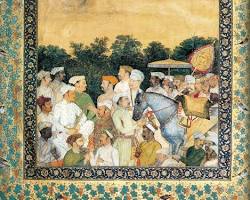
Fifth Transit: Early 17th Century (1606-1614) – Mughal Zenith and the Official European Foothold
- Uranus in Gemini Dates:
- August 9, 1606 – October 2, 1606 (Initial ingress)
- May 15, 1607 – August 23, 1613 (Main transit)
- November 20, 1613 – June 5, 1614 (Final re-entry)
- Scenario in Indian Rulers: This period falls within the reign of Emperor Jahangir (1605-1627), the son of Akbar. The Mughal Empire was still at its zenith, powerful, centralized, and culturally vibrant, exerting control over vast territories.
- Mughal Consolidation: Jahangir’s reign was largely focused on consolidating the vast empire he inherited. While there were ongoing campaigns, the core of the empire remained stable.
- Official European Entry: This transit marked the crucial initial diplomatic and commercial penetration of European powers into the Mughal Empire’s official sphere.
- 1608: Captain William Hawkins arrived at Jahangir’s court in Agra, seeking permission to establish a trading factory.
- 1612: The English defeated the Portuguese in the Battle of Swally, significantly boosting their prestige.
- 1613: Jahangir granted permission for the English East India Company to establish its first permanent factory at Surat. This was a pivotal moment – the first officially sanctioned British trading post within the heart of the Mughal Empire.
- 1615: Sir Thomas Roe arrived as ambassador from King James I of England, further cementing English trading privileges.
- Nature of Change: While the Mughal Empire remained the dominant sovereign power, this transit marked the unassuming but profoundly significant entry point for organized external forces (the British and Dutch East India Companies) into the administrative and economic fabric of India, with the official sanction of the Mughal state. It was the seeding of future governmental transformations, laying the groundwork for eventual colonial influence.
Sixth Transit: Late 17th Century (1690-1698) – Mughal Decline and the Rise of New Indian Powers
- Uranus in Gemini Dates:
- July 10, 1690 – November 4, 1690 (Initial ingress)
- April 28, 1691 – July 31, 1697 (Main transit)
- December 16, 1697 – May 18, 1698 (Final re-entry)
- Scenario in Indian Rulers: This was a period of intense turmoil and fundamental shift, dominated by the protracted reign of Emperor Aurangzeb (1658-1707) and the beginnings of the Mughal Empire’s decline.
- Erosion of Mughal Central Authority: Aurangzeb’s long, costly, and ultimately unsustainable wars in the Deccan severely drained the Mughal Empire’s resources, alienated various communities, and weakened its central administration. This was a critical internal governmental shift, leading to a de facto decentralization of power.
- Rise of the Marathas: Under figures like Chhatrapati Rajaram (successor to Shivaji), the Maratha Confederacy continued to consolidate its power, fiercely resisting Mughal attempts at subjugation. This period was crucial for the Marathas to emerge as a formidable independent power with its own distinct administrative system.
- Strengthening European Influence: While the Mughals were preoccupied, the English and French East India Companies were further strengthening their fortified trading posts (factories) in coastal areas. They began to exert more influence in local political affairs and engage in military activities to protect their burgeoning commercial interests.
- Nature of Change: A period of profound governmental instability and internal fragmentation of the dominant Mughal power. It witnessed the rise of new, powerful indigenous governmental entities (like the Marathas) and the incubation of future European colonial rule, subtly reshaping the balance of power.
Seventh Transit: Late 18th Century (1774-1782) – British Consolidation and the Assertion of Parliamentary Control
- Uranus in Gemini Dates: June 19, 1774 – April 28, 1782
- Scenario in Indian Rulers: This period saw the British East India Company rapidly solidifying its power in India amidst significant conflicts.
- Regulating Act of 1773: Though passed just before the transit, its implementation and impact were acutely felt during this period. This Act was the first major step by the British Parliament to regulate and control the increasingly powerful British East India Company’s administration in India, marking a shift towards direct governmental oversight from London.
- Anglo-Maratha and Anglo-Mysore Wars: The First Anglo-Maratha War (1775-1782) and the Second Anglo-Mysore War (1780-1784) were fought. These protracted conflicts, though not always leading to immediate annexation, fundamentally altered the political map of India, establishing the British East India Company as the undisputed dominant European power and weakening rival Indian states.
- Warren Hastings as First Governor-General: Warren Hastings became the first Governor-General of Bengal in 1774. His tenure was marked by efforts to reform the East India Company’s administration and revenue collection, laying crucial groundwork for future direct British rule.
- Nature of Change: An evolutionary but profound shift in the nature of governance, where the British East India Company transitioned from a purely commercial entity to a more formalized, politically interventionist administration, increasingly subject to British parliamentary control. It clearly set the stage for full imperial rule.
Eighth Transit: Mid-19th Century (1858-1865) – The End of Company Rule and the Dawn of the British Raj
- Uranus in Gemini Dates: 1858 – 1865 (Approximate, exact dates vary slightly by ephemeris)
- Scenario in Indian Rulers: This transit followed the seismic event of the Indian Rebellion of 1857, which profoundly shocked the British establishment and forced a radical reassessment of Indian governance.
- Indian Rebellion of 1857: The widespread uprising against British rule catalyzed immediate and drastic changes.
- Government of India Act 1858: Passed on August 2, 1858, this landmark Act formally abolished the rule of the British East India Company.
- Direct Rule by the British Crown: Governmental authority over India was directly transferred to the British Crown, specifically to Queen Victoria. This led to the creation of the office of the Secretary of State for India in London and the Viceroy in India, establishing a centralized, direct imperial administration.
- Nature of Change: A direct, revolutionary, and absolute change of government, where the sovereignty of India shifted from a quasi-governmental commercial entity to the full and formal control of the British Empire. This was a complete overhaul of the administrative and political structure.
Ninth Transit: Mid-20th Century (1941-1949) – Independence and the Birth of a Sovereign Nation
- Uranus in Gemini Dates: 1941 – 1949 (Approximate, exact dates vary slightly)
- Scenario in Indian Rulers: This period was the culmination of India’s long struggle for independence, intensified by global geopolitical shifts.
- Weakening British Empire: World War II significantly drained Britain’s resources and weakened its imperial capacity.
- Indian Independence Act 1947: This momentous Act, passed by the British Parliament, granted India independence from British rule on August 15, 1947.
- Partition of India: Coinciding with independence, India was partitioned into two independent dominions: the Union of India and the Dominion of Pakistan, leading to massive population transfers and tragic communal violence.
- Formation of a Sovereign Government: India established its own Constituent Assembly and began the process of drafting its Constitution, leading to the formation of its own democratic, sovereign government with a President as its head.
- Nature of Change: The most dramatic and comprehensive change of government, marking the end of colonial rule and the birth of independent, self-governing nations with entirely new indigenous governmental structures and rulers.
Tenth Transit: The Current and Upcoming Period (2025-2033) – A New Era of Transformation
- Uranus in Gemini Dates:
- July 7, 2025 – November 7, 2025 (Initial Ingress)
- April 25, 2026 – May 22, 2033 (Main Transit)
- What to Expect for Indian Rulers and Governance: Drawing from the historical patterns and the astrological themes of Uranus in Gemini, this period is poised for profound transformations in how India is governed, who holds influence, and the very nature of its political and administrative landscape. While a complete change of sovereignty is unlikely, the modes of rule and the structure of power are ripe for radical shifts.
- Revolution in Communication and Digital Governance: This will be a defining feature. Indian rulers will increasingly rely on cutting-edge digital platforms and Artificial Intelligence (AI) for direct communication with the populace, policy implementation, and service delivery. This will fundamentally alter political campaigning, public discourse, and the efficiency of bureaucracy. Leaders who are adept at leveraging these tools will gain significant advantage.
- Decentralization and Empowered Regional Rulers: A strong historical resonance points to a potential push for greater autonomy for states and local governing bodies. We might see a significant transfer of power and resources from the center to states, and even to municipal corporations and village councils (Panchayati Raj institutions). This could lead to the rise of new, powerful regional leaders and parties, challenging the current national political dominance and making coalition-building more complex and dynamic.
- Shift in Leadership Archetypes: The qualities that define effective leadership will evolve. Rulers will need to be incredibly agile, adaptable, and quick-thinking to navigate rapid information flows and unexpected disruptions. Those who are rigid, slow to adapt, or unable to communicate effectively in the new digital landscape may find their authority challenged.
- Increased Citizen Participation and Scrutiny: New communication technologies will empower Indian citizens to organize, voice dissent, and participate in political processes in unprecedented ways. This could lead to more “bottom-up” movements, increased demands for transparency and accountability from rulers, and a collective urge to question established narratives.
- Innovation in Policy and Governance Models: Expect radical new ideas and approaches to governance. This could manifest as experimental economic policies, innovative social programs, or pioneering models of public-private partnerships. The intellectual capital and data-driven insights will likely play a more prominent role in policy-making.
- Upheaval in Infrastructure and Urban Planning: With Gemini ruling transportation and local areas, expect significant disruptions and innovations in urban planning and infrastructure development. Rapid urbanization, new mobility solutions, and smart city initiatives might accelerate, but also bring their own set of challenges.
- Fluidity in Alliances and Internal Party Dynamics: The political landscape within India could become highly fluid. Existing political parties, including the ruling ones, might experience significant internal dissent, ideological shifts, or even unexpected splits. Alliances between parties could form and dissolve rapidly, leading to frequent changes in government at state or even national levels.
- Nature of Change: The upcoming transit promises a period of dynamic and potentially turbulent transformation for Indian governance and its rulers. It will be characterized by a radical redefinition of how power is exercised, communicated, and perceived, driven by rapid technological advancements, a push for greater decentralization, and a more empowered, digitally-connected citizenry. This isn’t just about who sits on the throne, but how the throne itself operates in the digital age.
Conclusion: A Cosmic Blueprint?
The recurring alignment of Uranus in Gemini with pivotal moments of governmental and leadership transformation in India, spanning nearly a millennium, presents a compelling pattern. From the consolidation of new empires and the fragmentation of dominant powers to the transfer of sovereignty and the embrace of modern democracy, each transit has coincided with an era where the rules of governance were rewritten.
While astrology provides a symbolic framework, the historical evidence suggests a fascinating synchronicity. As Uranus once again enters the communicative and innovative sign of Gemini, India stands on the precipice of another transformative era. The nature of its rulers, the structure of its governance, and the very fabric of its political communication are poised for a revolutionary shift, shaping the destiny of the world’s largest democracy for decades to come. The coming years will undoubtedly be a testament to how India navigates the Uranian pulse of change, adapting and innovating in a truly unprecedented global landscape.