For centuries, cocoa was the “Food of the Gods.” Today, it is one of the most volatile, politically charged, and technologically transitioning commodities on the planet. As of February 2026, the industry is reeling from a historic price “reset”—dropping from the staggering highs of $10,000+ per tonne in 2024 to a stabilized but tense $3,000 range today.
Whether you are an investor, a chocolate lover, or a student of geopolitics, here is the full story of the cocoa bean.
1. Botany and The “Cocoa Belt”
Cocoa comes from the Theobroma cacao tree. These trees are incredibly delicate, requiring a specific “Goldilocks” environment: high humidity, constant rain, and protection from direct wind.
The Lifecycle:
-
The 5-Year Wait: It takes half a decade for a tree to reach full production.
-
The Manual Harvest: Unlike wheat or soy, cocoa cannot be harvested by massive combines. Farmers use machetes to hand-cut pods from the trunk to avoid damaging the “flower cushions” that produce next year’s crop.
-
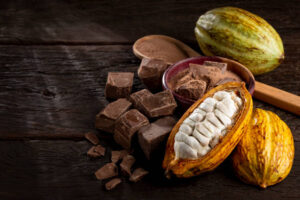
The Flavor Chemistry: The beans inside the pod are bitter and white. They must be fermented in sweatboxes for 5–7 days. This is where the chemical precursors to “chocolate flavor” are born.
-
Drying: Beans are sun-dried on wooden platforms. In 2026, many farms are now using solar-powered mechanical dryers to prevent mold during increasingly unpredictable rainy seasons.
2. The Global Power Map (Suppliers and Importers)
The cocoa market is a “bottleneck” economy. While consumption is global, production is hyper-concentrated.
The Heavyweights:
-
The West African Duo: Ivory Coast (40%) and Ghana (15-20%) dominate. They act as the “price makers” for the world.
-
The Rising Star (Ecuador): Ecuador is currently the world’s most efficient producer. In 2026, their high-yield varieties (like CCN-51) are winning over manufacturers because they are more resistant to the diseases currently ravaging African farms.
-
The Hub (The Netherlands): The Port of Amsterdam remains the “Cocoa Capital.” It isn’t just a port; it’s a massive industrial zone where raw beans are processed into liquor, butter, and powder.
3. History: From Currency to Confectionery
-
Ancient Mesoamerica: The Aztecs used cocoa beans as literal money. 100 beans could buy a turkey. It was consumed as a cold, spicy, frothy drink.
-
The European Shift: In the 1500s, Spain added sugar. By the 1800s, the Dutch Cocoa Press allowed us to separate the fat (butter) from the solids (powder), leading to the creation of the first solid chocolate bar by J.S. Fry & Sons.
-
The Colonial Legacy: The crop was moved from the Americas to Africa by colonial powers to find cheaper labor and better climates, setting the stage for today’s geopolitical tensions.
4. The Geopolitics: “The Cocoa OPEC”
In the 2020s, West African nations realized they held the world’s chocolate supply hostage.
-
The Living Income Differential (LID): Ivory Coast and Ghana added a $400/tonne premium to all sales to combat farmer poverty.
-
The 2026 Standoff: This month (Feb 2026), a major conflict is occurring. The global market price has dropped, but African governments are trying to keep “farmgate prices” high to protect their citizens. This has led to a warehouse backlog where millions of tonnes of cocoa are sitting unsold as big brands wait for prices to fall further.
5. The 2026 “Health & Tech” Pivot
The cocoa industry is facing a dual threat: Changing human bodies and new technology.
The Health Revolution
-
“Sober Curiosity” for Sugar: Just as people are drinking less alcohol, they are eating less sugar. This has forced the cocoa industry to pivot toward High-Flavanol Cocoa (marketed as a health supplement) and Dark Chocolate (70%+).
-
The Ozempic Effect: The rise of GLP-1 weight-loss drugs has measurably slowed the “impulse buy” of candy bars at checkout counters, contributing to the 2026 surplus of beans.
The Tech Revolution
-
Traceability (EUDR): As of late 2025, you cannot sell cocoa in Europe unless you have a digital GPS map proving the beans didn’t come from a deforested area.
-
Lab-Grown Chocolate: In February 2026, “cell-based cocoa” has moved from the lab to pilot factories. While it won’t replace the bean yet, it is the first real existential threat to traditional farming in history.
6. Commodity Secrets: Why Cocoa is “Special”
-
Inverse Butter/Powder Relationship: When you crush a bean, you get butter and powder. If the world wants more butter (for white chocolate/lotions), the market gets flooded with “excess” powder, driving those prices down.
-
The “Gold” Rivalry: In Ghana, illegal gold mining (Galamsey) is the biggest competitor for land. A farmer can make more in a week from gold mining than in a year from cocoa. This is the “silent killer” of cocoa supply in 2026.
Conclusion: The Future is Ethical or Empty
As we look at the market in February 2026, cocoa is no longer just a “cheap snack” ingredient. It has become a high-stakes battleground for environmental ethics, farmer rights, and biotechnological innovation. The era of “cheap chocolate” is likely ending, replaced by a more transparent, tech-driven, and health-conscious industry.